Politics, society, culture, freedom, democracy, Tibet, Thailand, Indonesia, Aceh, Southeast Asia, China, human rights, and any other subjects which are of interest to either Agam of Tapaktuan, or his unruly gecko.
The author may be contacted at agam [dot] tapak [at] gmail [dot] com Posting times are Bangkok time [GMT+7 = EDT+11].
The author may be contacted at agam [dot] tapak [at] gmail [dot] com Posting times are Bangkok time [GMT+7 = EDT+11].
SEARCH THE GECKO
TIBET INFO LINKS
   |
   |

BURMA FREEDOM VIDEO

E a r l i e r P o s t s

PROTEST AT RAGYA
Ragya, Machen County, Golog Amdo
March 21, 2009
March 21, 2009
UNDER ARREST
Lhasa region or city (unknown)
Date unknown
Date unknown
D a y b y D a y
Search the web with 
M o n i t o r s



Quotation of the Day
Website content
provided by The Free Dictionary
W A I
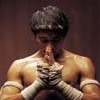 Our way of saying "thanks" in the Thai way. Here a nak muay Thai (kickboxer) offers respect and thanks for his teacher (wai khru) before a match. This is our local variation on the ubiquitous "hat tip" used in general blog culture.
A r c h i v e s

N e w s H e a d l i n e s
This Day in History
Website content
provided by The Free Dictionary
B l o g s

Tibet Blogs


Aqua's Dreamscapes
Beijing Wide Open
Chinese occupation of Tibet
kuala lumpur for a free tibet
Letters to the West
Life on the Tibetan Plateau
Meyul: in Exile
Precious Metal
RFA Unplugged
Shadow Tibet
The Interdependent
The Secret Tibet
The Soul of Tibet
TIBETSPACE
Tibet Talk
Tibet Will Be Free
Tibetan Studies Resources Blog
Tibetan Uprising Movement
Tibeto-logic
Voice for Tibet
Asia Blogs
2Bangkok 20 Alpha 4
American Expat in SE Asia
asiapundit
Beyond Wallacia
Burma Dialogue
Burma Digest
Burmese Bloggers without Borders
Burma-Myanmar Genocide 2007
China e-Lobby
Daai Tou Laam Diary
Far Outliers
Flaming Peacocks
Indonesia Matters
Jiwa Merdeka
Kaung Kin Ko
Macam-Macam
North Korea zone
Radio Free Nepal
Registan
Rule of Lords
Sarasonteh
Simon World
VietPundit
Iraq Blogs
HammorabiHealing Iraq
In the Red Zone
Iraq at a glance
Iraq Blog Count
IRAQ THE MODEL
Iraqi Bloggers Central
IraqPundit
The Messopotamian
Michael Yon : Online Magazine
Treasure of Baghdad
Middle East & the Stans
Across the Bay Afghan Warrior
Amarji - A Heretic's Blog
Big Pharaoh
Lebanese Political Journal
Martin Kramer's Sandbox
Muslims Against Sharia
Regime Change Iran
The Religious Policeman
SMCCDI
Syria Exposed
General Punditry
Belmont Club Best of the Web
Tim Blair
Blue Crab Boulevard
Chequer-Board
jules crittendon
Currency Lad
Democracy Project
Galley Slaves
Gateway Pundit
Victor Davis Hanson
Hot Air
INDC Journal
InstaPundit
Jihad Watch
Just One Minute
Oliver Kamm
Little Green Footballs
Llama Butchers
Mark in Mexico
Michelle Malkin
The Missal
neo-neocon
New Sisyphus
NormBlog
Oxblog
Power Line
protein wisdom
Publius Pundit
Doug Ross Journal
Sane Nation
Seeker Blog
SEIXON
Roger L. Simon
Solomonia
Stormbringer's Thunder
Don Surber
This ain't Hell
TigerHawk
Michael J. Totten
Winds of Change
ZenPundit
Eurotopia
Barce Pundit Davids Medienkritik
EuroPundits
Fjordman
Harry's Place
Iberian Notes
No Pasaran!
Zacht Ei
Can Con
Angry in the Great White North Autonomous Source
bob tarantino
Canada Free Press
Andrew Coyne
Damian Penny
Dust my Broom
Peaktalk
The Shotgun
small dead animals
Inkless Wells
Toons & Satire
Cox & Forkum Day By Day
iowahawk
Scrappleface
WuzzaDem
Media Watchers
The American Expat Backspin
Biased BBC
The Command Post
The Corner
The Daily Ablution
Diary of an anti-chomskyite
Hit & Run
HonestReporting
Oh, That Liberal Media
NewsBusters
PirateBallerina
Radio Blogger
Radio Equalizer
USS Neverdock
T i b e t
His Holiness the 14th Dalai Lama Tibetan Government-in-Exile
Tibet Information Network
Tibetan Committee for Human Rights and Democracy
International Campaign for Tibet
Canada-Tibet Committee
Phayul News
Australia Tibet Committee
Tibet Justice Center
Tibet Daily
Tibet Online Resource
Virtual Tibet Library
Dreams of Tibet
S o u r c e s
Memeorandum Snopes: Urban Legends
BBC | Monitoring
MEMRI
SITE Institute
A s i a P a c i f i c
Yahoo! News Asia The Jakarta Post
Paras Indonesia
Metro TV News Online
The Nation
Bangkok Post
Democratic Voice of Burma
Irrawaddy News
Mizzima News
BurmaNet News
Burma NewsLadder
Southeast Asia News
Sydney Morning Herald
The Australian


 Home
Home
Agam's Gecko

Saturday, August 11, 2007
ACEH - JAVA TRIP REPORT
| Y |
our humble correspondent has returned from yet another wonderful time in Indonesia. My apologies, for being away from the site longer than anticipated, are hereby offered to my last few remaining faithful readers.
As I wrote last month, my mission was to serve as guide to my Very Important Guest, who is in Asia during the term break from her studies in Asian Art and Archeology and using the opportunity to further her own research. In addition to all that, she is also my daughter -- of whom I am very proud.
We spent the first few days in Jakarta, arranging our onward transport to Aceh and acquiring her longer term visa (longer than the one month granted on arrival) for her summer research in Thailand. We were able to submit the application on the same day we arrived in Jakarta, and to pick up the passport two days later from the Thai embassy, enroute to Soekarno - Hatta Airport for the flight to Medan, in North Sumatra. During the three days in the Indonesian capital, my daughter (whom I'll refer to as "K" here) eagerly began practising her Indonesian language and trying all the new foods on offer. Streetside ketoprak vendors became a quick favourite.
We stayed at the only hotel I've ever used in Jakarta, where I first found accomodation 17 years ago -- Losmen Kebun Sirih. It's pretty basic, but the people there are great, the three rooftop rooms have a common patio (a nice place to get to know your neighbours), and the built in warung serves a wide variety of food. I thought the spartan but purely Indonesian environment would be a good preparation for Aceh, and in my view staying away from other foreigners always makes for a more enjoyable experience. This was proven true once again, as we made good friends with our rooftop companions, a couple of fellows from Surabaya. Long evenings of conversation with them helped K not only in picking up more of the language, but in experiencing the easy-going openness which has always impressed me about the Indonesian character.
We flew to Medan in a late afternoon, arriving just after sunset (and a spectacular view of Lake Toba from the air). I had been sms'ing my friends in Tapaktuan after picking up an Indonesian sim card for my phone in Jakarta (for about a buck and a half!), and Azirwan had arranged for his friend in Medan to meet us at the airport and take us to the place where the Toyota Kijangs depart for Tapaktuan. Azir used to drive this route and knows all the drivers (he now works for a Japanese NGO, the Association of Medical Doctors of Asia). After a short wait around the terminal office, we were on the way to Aceh and a ten-hour drive across the rugged spine of Sumatra.
The steep climbs and hairpin curves on this narrow highway begin a short distance out of Medan, and continue all the way to the west coast. It can only be compared to riding a wild rollercoaster ... for about 9 hours. Sleep is difficult, though for me that might be attributed to the excitement of returning to my beloved Tapaktuan as much as to the vertigo-inducing g-forces in the vehicle. Our driver on this trip was careful though, and had a very good taste in music, for which I was thankful. Indonesian pop is often quite good indeed.
The highway was in much better condition than it was when I made the trip last year, but the rest stops were still very welcome -- first at a bustling fruit market outside Berastagi, in the Gayo highlands, and another around mid-journey at a roadhouse / restaurant near the Aceh- North Sumatra provincial boundary. This lone outpost, cold and damp in the high rainforest, was to be the site of a strange occurrence on our return trip. When dawn finally broke, we were driving up the south Aceh coast.
 |
Tapaktuan seen in the distance, from Mohammad Hatta's Rest Panorama. (click on images for a better view) |
At Tapaktuan, and for at least 10 km in both directions, the mountainsides drop right into the ocean -- and it seems reasonable to assume that this geography continues beneath the water. While the massive waves were taking tens of thousands of lives (possibly as many as 200,000 in Aceh alone), the people of Tapaktuan (as near to the epicenter as devastated Meulaboh) were more concerned with the earthquake itself. They say the seawater just filled the creeks and canals briefly before receding again. They initially had no idea how bad it was elsewhere.
When we reached Bang Hamdani's place, the family was waiting (he'd already texted me two minutes before we pulled up, asking "Where are you now?"). I call him Bang (rhymes with "rung") because he's the elder brother of my late friend Uddin (who was killed by GAM almost eight years ago) even though he's younger than I. Abang is elder brother, and after all, Agam only came into existence 17 years ago. Both of Uddin's brothers are abang to me. But Dani's son Krisna, who is in his 20's, calls me Om (uncle), so go figure. I get "Pak Agam" quite a lot now too, heh heh.
Our welcome was warm and emotional, although it had only been a year and a half since I'd seen them last. They were all so happy to finally meet my daughter, who they'd been bugging me for years to bring with me. Both Dani and his wife Ade made it clear to her right from the start that she is part of the family now too. She has a home in Tapaktuan and a family there, and the connections I made with them so long ago will continue after I'm gone. This is a very wonderful thing.
For K, this would be a period of total immersion in family life, with everyone pitching in to teach her basics of Indonesian (although the local dialect is considerably different). We spent some time getting caught up on each other's news before the weary travellers caught up on a few hours of sleep, and by midday and well rested, enjoyed a succession of visitors joining the conclave on Dani's front porch. Bang Heri, Uddin's other brother (and mine), Azirwan who dropped in between driving duties for AMDA, and other old friends came to meet Agam's anak.
 |
Air Dingin is a popular recreation spot. |
The next morning Bang Heri came early to take me out for kopi (you should be able to guess that one). We went out to a little warung outside town next to the beach, where the coffee-drinkers play chess (Heri is a certified champion at this game). Afterwards, he pointed his motorcycle northwards and we headed up the coast for a while, then turned inland passing through small villages and following a river into the interior. There were some small housing projects recently put up to give relief to families displaced when this river recently flooded and destroyed many homes (as well as the road we were using).
As much as I was enjoying being with Heri, part of my mind was worried about K, who had still been sleeping when we left. Nobody at home spoke English (in fact Ade told me that I should be speaking only Indonesian with her so she would learn faster -- which is how it was for me way back when), and I didn't want her to feel isolated. Heri and I had been gone for hours on our kopi break, and headed back towards town.
And just as we're about to turn into the street, who's that blasting past us in the other direction? Why it's Ade on her motorcycle with K on the back, heading out for one adventure or another! I had time for a quick wave and a nod, as one does approximately every three minutes riding around this town in any case. I felt extremely gratified that on only the second morning, K is already going off for adventures without ayah, totally comfortable with people she can barely understand, and totally safe.
She had a lot of experiences like that during our time in Tapaktuan -- going with Ade and some other ladies to visit a newborn in a nearby town, going swimming with Jerli and Ade at another popular spot, Lubuk, and attending a wedding ceremony and meeting lots of new people in a more distant town, Labuan Haji. This made me very happy indeed.
 |
Batu Hitam. |
 |
Tingkat Tujuh, the seven stage waterfalls. |
We rode on the broad beach at Air Pinang and stopped for a while, watching a lone net fisherman in the surf before turning back toward town, taking a rest at Hatta's Panorama (where the first picture above was taken). This is high upon a coastal prominence, with spectacular views along the coastline in both directions. The country's first vice-president, and co-declarator of independence, Mohammad Hatta, took a rest here during a visit to Aceh in 1955. A good place for some more of that fine Aceh coffee and some snacks, before going back to Batu Hitam to visit my old friend Pak Syafran.
We had made a very strong connection, Pak Syafran and I back in 1990, and I make a point of visiting him every time I return. He always tells me I haven't changed, but he's actually the one who never seems to age. We both get a little teary-eyed whenever we meet again. He was quite tickled to meet my daughter after all these years, and was coaxed into trying his English with her -- which he picked up years ago by listening to BBC shortwave. We had a good visit with he and his family, and headed home at dusk.
 |
Tapaktuan as seen from the platform of the old Dutch light tower on Gunung Lampu. |
We can also see the locations of many of the remnants of local legend, the battle between Tuan (a giant man, guardian of the place) and one of a pair of nagas (dragons). Tuan defeated the naga, spilling his guts hither and yon; parts of naga innards landed on the south side of the bay, becoming Batu Merah (Red Stone), and his heart landed further away to become Batu Hitam (Black Stone). A large, barely submerged rock offshore from where we stood, was Tuan's cap, and another underwater stone feature, apparently a tall rock column breaking waves offshore, was his tongkat (staff). Far below us, in the rock formation at the rugged shore, is Tuan's tapak or footprint. He was a big guy indeed, and this is why the place is known as Tapak Tuan.
Our days were filled with such great experiences with our wonderful family and companions, a time that K will surely never forget and will hopefully draw her back again and again, as it has with me since what seems a lifetime ago. Getting to know Agus and Pak Wajir, who were both staying with us at Bang Dani's place, and working together with them on a house extension project, or having conversations together on the porch into the wee hours of the morning -- all so memorable. Pak Wajir is a fount of knowledge on Aceh's history and culture, and there is much to learn.
 |
Is there any prettier place to pick up your dinner? |
But even this timeless time in Tapaktuan had to eventually come to an end -- K and I had an appointment with a flight out of Medan, and research yet to be done in Central Java. As luck would have it, Azirwan also had a mission in Medan that weekend, and would travel together with us (enjoying free fare for sharing the driving duties on the trip). So the evening before our flight, we bade goodbye to our family amidst many stifled tears. I think K was surprised at how attached she had become, and it's always so difficult to leave them all. We would enjoy continued contact through sms during the remainder of our time in Indonesia, particularly from Ade who had assumed a motherly protectiveness toward K. "Where are you guys now, is K healthy and happy? Reply." They made a great connection, those two.
The long rollercoaster drive back to Medan was uneventful but for one incident at the aforementioned roadhouse / restaurant in the cold and damp high country. We reached it about 1 am for a w.c. and snack break. Azir would spell off our driver from here to Medan, and as I walked back to the Kijang, the first driver said to me, in English, "Let's go!" All passengers aboard, but I expected the fellow to take Azir's seat next to me. Where'd he go? Azir opens the driver's door, looks around, and disappears too. We wait.
We waited for eight hours. The driver had taken an empty seat in another Kijang, the better to stretch out and sleep. Our keys were still in his pocket. There was no cellphone service in this remote place. His number was hurriedly given to other drivers about to leave, that he could be contacted when they reached a cell service area. Surely he would soon realise his mistake, and return with the keys? Or hand them off to another driver coming our way? What to do but wait, and hope he came to his senses? K began visualizing the keys becoming hot in his pocket, to no avail. But it seemed reasonable that one of the other drivers would soon establish phone contact with him.
Except that this fine fellow had gone immediately to sleep, comfortably stretched out on somebody else's back seat, and with his phone turned off. By 4 or 5 am, most of the other passengers stranded with us had flagged down other vans with spare seats, and were on their way. If we didn't get underway by 11 or so, I'd have to do the same. I sat up with Azir while K slept in the car, and then I tried to sleep some until the banging of Charles Bronson mechanics attempting to dislodge the ignition assembly made that impossible. K and I retreated into the cafe for some instant noodles and coffee, when... what was that? The Kijang's windshield wipers moved a few inches. The turn signal flashed momentarily, and then the engine kicked over! Azir and his bystanding advisor had hotwired the thing, and we were mobile again at 9 am. Ayo!
About one hour down the road in Sidikalang, who do we pass going the opposite direction, but old sleepy-head himself. We stop, and he gets out of the car he'd had to hire after arriving in Medan four hours earlier and well rested, turning on his phone to discover waiting messages about what had happened. He was pretty sheepish, looking at me imploringly before blaming Azir for "not asking for the keys." The guy had taken off before anyone knew he was leaving in another car. Whatever, let's get going -- we still have plenty of time to make our flight, and for Azir to do his errands in Medan.
The positive side of this mishap though, was that we passed through the spectacular Karo (or Gayo) Highlands in daylight -- and I was actually seeing this route for the first time. K was enthusiastically taking photos through the open window as we passed many fine examples of the distinctive Karo architecture in homes, large buildings and churches. This is a predominately Christian area in Karo land, and I noticed many roadside signs offering babi panggang (roast pork).
We had plenty of time to rest at the transport office in Medan while Azir ran his errands. He and his buddy took us to the airport, and I bade farewell to my good and loyal friend. K and I would spend one more night in Jakarta at the trusty Losmen Kebun Sirih, and fly on to Yogya the next afternoon.
When we trudged up to the roof at the losmen late that evening, our previous companions from Surabaya were still there -- and it was like a long lost friends' reunion! This is Indonesia. I went out to get some take home fried rice for us, and another night of wonderful conversation followed.
The next morning was the kick-off of the Jakarta governor's election campaign, and nearby Kebun Sirih Avenue was closed to traffic for the party. K and I headed down that way to see the festivities and look for some breakfast -- delicious ketoprak (anything with spicy peanut sauce is a hit in this family). While we were sitting at the bench enjoying our food on the fringe of the crowded street, a reporter approached and asked me a few questions regarding whether we felt safe amid this big gathering of people. When he found that I speak Indonesian, he asked if he could interview me on video. Boleh saja! (of course) So apparently we were on RCTI news that day.
The flight to Yogyakarta (everyone still calls it "Jogja") is under an hour, and we had spectacular views of some of the volcanoes of Central Java peeking out above the clouds. I had the taxi drop us in Sosrowijaya, a good location near famed Malioboro Street and the railway station, and full of small guesthouses and hotels. We checked out a few places but I was not yet satisfied -- I wanted to find a place that had something of that real Yogya charm, maybe with a small garden or courtyard, and the songbirds the Javanese famously love.
We settled on a small, tidy establishment called Hotel Monica (no jokes now) on the periphery of the Sosrowijaya tourist enclave. The place had mostly foreign residents, but at least it wasn't one that turned away Indonesian guests (like many do), so we would have Indonesian neighbours as well. Our room fronted on a small, enclosed courtyard full of plants with a fish pool and fountain. This would be a pleasant place to base ourselves for excursions around Yogyakarta. We planned for a free day the next day, and arranged for transport to Borobudur and Prambanan the following day.
 |
Borobudur, ancient three-dimensional Buddhist mandala. |
 |
One of the laticed stupa-enclosed Buddhas on the upper levels has been left open, to cast his gaze at Mt. Sumbing. |
 |
72 laticed stupas surround the large central stupa on the three upper levels. A statue of the Buddha resides within each one. |
Which is the main reason why the two hours allotted (being part of an organised trip) was simply not enough time for the documentation that K wanted to do. She resolved to return another day, and to spend most of it doing her study. We picked up the pace and circled each level, enjoying the atmosphere of this ancient structure and the phenomenal vistas in every direction, right up to the top levels where the tourists were already sunbathing around the central stupa. Sheesh. Try that in a mosque, eh?
By 8:30 it was time to go down for the included breakfast at an open restaurant in the bustling market area outside the park, and meet up with our transport. After brief stops at the nearby Mendut and Pawon temples (constructed in perfect alignment with Borobudur itself, each of these were, and are still, preparatory stops for the pilgrim), we were off to the opposite side of Yogyakarta city, and the ancient Hindu monument Prambanan.
 |
Mount Merapi dominates the countryside of Yogyakarta Special Region. |
 |
Prambanan, a Hindu temple complex dating from the 9th century. |
Prambanan didn't have an easy time of things when last year's earthquake struck. Considerable damage was done to the structures, and the central area is now fenced off to visitors. The temple is also rich in bas relief stories (though not as overwhelming in quantity as Borobudur), telling the Ramayana legend of Rama, Sita and Hanuman. The Ramayana is performed on stage with the illuminated temple as backdrop, on full moon nights during the summer.
 |
Wayang Kulit (shadow puppet plays) with Gamelan orchestra. |
At Sonobudoyo the program is more dedicated toward introducing foreigners to the art form, and the show wraps up at a modest 10 pm. I was looking forward to once again being enveloped by that delicious gamelan music, and seeing some more of the adventures of Arjuna, Krishna, Bima and Gatokaca. But Pak Olot, who gave us an early arrival introduction to the gamelan and some of the shadow puppets, explained that the show that night (and every night) would be from Ramayana. I asked why, given how much the Javanese love their traditional Mahabarata? The tourists just complain, he said, if they don't see Hanuman (the monkey hero of Ramayana). "We tried Mahabarata for a while but the tourists just complained, so we give them Ramayana instead."
Well, they don't understand what they're missing. They've heard of one character -- Hanuman the heroic monkey -- and go away disappointed if they don't see him. They've written off the vastly more complex epic, the one most loved by the culture they're supposedly here to experience, in favour of the story whose outline can be told in about 15 minutes. Because they like the monkey, and complain when they don't get him. Typical.
The show was great in any case, and we did return for more. It's customary to watch the performance first from the dalang's (puppet master's) side of the screen until the action really gets going, and then to get up and move to the shadow side where one can observe the characters' true "inner essence." It's perfectly fine to wander around during the show, taking a close look at the gamelan players, watching the dalang do his stuff, around to the other side of the screen where the puppets seem to come alive. Or simply close your eyes for a moment, and be carried away by the waves of the gamelan and the sweet voices of the singers (seen at right in the photo above).
 |
Musicians entertain patrons of the lesehan outdoor restaurants along Malioboro Street. |
The Sultan's Palace, or Kraton is a fascinating place to spend a morning or afternoon. The current sultan is a thoroughly modern man, and the tenth in his line. He functions much like the governor of this special province, with many added traditional duties to perform. Hamengkubuwono X is greatly respected across Indonesia, and has been frequently speculated upon as a national leader -- a role which seems not to interest him. The people of Yogya are greatly attached to their sultan.
 |
The horse-drawn andong is a popular transport along Malioboro Street. |
The very last conversation I had before boarding our return flight, with the taxi driver to Yogya's airport, was along these lines. He completely agreed with me, saying that when he travels to another part of his country, even to another part of Java, he feels somewhat like a foreigner. But this common characteristic, in every part of this country, quickly makes him feel at home. The stranger as brother, what a concept. The taxi driver knew exactly what I was talking about, as he'd experienced it for himself. We talked non-stop all the way to the airfield -- another great connection made. He like many others have, thanked me for my observations and told me he was proud of his people for this quality. And rightly so.
Tuesday, December 19, 2006
ACEH TURNS A PAGE
 |
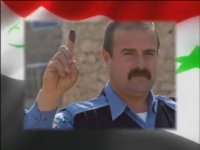
| Fatima Syam, a tsunami survivor who lost 10 of her 12 children in the disaster, votes near her temporary shelter at Desa Alue Naga, near Banda Aceh. Photo: REUTERS/Tarmizy Harva |
| E |
lections were held in Aceh last week, where citizens voted for their Governor and Vice-Governor for the first time in their history. Under the newly-enacted autonomy laws, which followed the Helsinki peace accord signed by Indonesia and the Gerakan Aceh Merdeka (GAM) separatist movement on August 15, 2005, Aceh was to be exempt from one restrictive regulation which applies to all other elections in Indonesia. Independent candidates without affiliation to a political party (defined as having a national presence and a minimum membership in all provinces) would be allowed to participate. The result has apparently shaken some power centres in Java.
There were eight teams of Governor/Vice Governor candidates on the ballot, leading most Indonesian observers to expect a run-off election (in the event of no team gaining at least 25% in the first round). As of Sunday evening, with around 70% of voting precincts counted, the independent team of Irwandi Yusuf and Muhammad Nazar were leading with about 34% of the vote, with their nearest competition at less than 20%. It appears that Irwandi Yusuf will become Aceh's next Governor. Official final results are expected on January 2.
Two years ago, Irwandi Yusuf was in a prison in the capital Banda Aceh. On December 26, the wave which killed more than 200,000 along Aceh's coasts, also destroyed the prison and set him free. Prior to his imprisonment, Yusuf had been a veterinary science professor at Syaiah Kuala University in Banda Aceh, and also a member of GAM dealing with public and media relations.
Muhammad Nazar was a democracy activist in the heady period after the fall of Suharto, and headed the Aceh Referendum Information Center (SIRA). This civil society group had organised massive and peaceful demonstrations in 1999 and 2000, asking the central government to permit a referendum on independence. He was arrested several times for this democratic activity, and was handed a five year sentence in 2003.
The exile leadership of GAM had declared that there would be no "GAM ticket" for the election, and that GAM supporters should vote their conscience. However, the Sweden-based exiles did declare their support for Humam Hamid and Hasbi Abdullah, backed by the Development Unity Party (PPP, one of the old, established national parties). This is the team which is running in second place in the current count, with about 19%. So the pro-GAM vote split at least two ways, placing first and second.
There is some excellent analysis and further information on Yusuf and Nazar here at JakChat (wai Indonesia Matters). Most heartening for me is the possibility that the sharia law foisted on Aceh by the central government may eventually be done away with. To date this has amounted to patrols of "morality police" -- the Wilayatul Hisbah, comparable to the Saudi muttawa -- making sure women are dressed "properly," and no one engages in gambling or drinking alcohol. Punishments presently go as far as public canings, but in recent weeks there has been talk of instituting hand amputations for thieves. Irwandi Yusuf has already said he will not allow that to happen.
Aceh was bullied into accepting sharia law by the central government, which felt that this type of "special autonomy" would eliminate the desire for independence. I don't believe that most Acehnese want it, outside of some fundamentalist minority. During my time in Aceh in January of this year, I asked opinions on this from almost everyone I talked with. Very few felt that this regime of "Islamic law" would be beneficial for Aceh. In South Aceh, where I spent most of that time, it was not uncommon to see women out and about in the town without their heads covered, or riding motorbikes with hair blowing free. When I would ask my companions why the women were not afraid to do this, they would just say it's no big deal. "There might be a razia jilbab (headscarf "sweeping") on Saturday, so they'll just wear it then." Many people in South Aceh are hoping for tourism development in the future -- something which will never happen with sharia law in place.
GAM has never been an Islamist movement, but rather a secular, political one. Their aim had always been for a free, democratic (and independent) Aceh -- never for an Islamic state. Then came the disaster beyond comprehension, the renewal of peace negotiations, and a decision to trade their bullets for ballots. With the Helsinki accord, GAM pledged to disarm and work for the Acehnese within the framework of Indonesia. A GAM spokesperson said in September (quoted in the JakChat link above):
Notably the leadership of GAM, or the Free Aceh Movement, which negotiated the now year-long peace deal with Jakarta, maintains the implementation of democracy and not Sharia is its priority, and says that public floggings, for instance, are not part of Aceh's Islamic tradition.In an interview on Singapore Radio, Indonesia researcher Sidney Jones had this to say about Irwandi:
[...]
So for the state, what is the business of the state dictating how women should dress? It's ridiculous.
He was the only candidate with any concrete ideas on anything. He is somebody who is extremely smart, is US educated, has been working absolutely tirelessly since the MOU. And in fact, during the MOU as well, to try and ensure that the peace agreement was held. He was responsible for the de-commissioning of the arms and basically, secured some of those last weapons almost by personally yanking them out of people's arms. He has been tireless in his efforts to try and get benefits to some of the ex-combatants so that they will not be trouble makers, and will in fact commit themselves to the peace process. So I think overall, he is a good thing. I do not know some of the GAM people who have been elected at a district level but they are probably not all as competent as Irwandi is, but I think people should see Irwandi as one of the most capable of candidates that was running for governor.It will take some months before we will see how successful Irwandi Yusuf will be as Governor of Aceh. The provincial parliament (DPRD) is stuffed with people who are not likely to see things his way, so he may have problems getting measures through that body. But if he follows through on his promises of cracking down on the rampant corruption in the province and improving health, education and economic development, it might be possible to see sweeping changes at the next legislative election in 2009. With a new leader who is a strong believer in genuine democracy and equal rights for women, and who has pledged to bring more women into the political process, hopefully the days of morality police telling women what to wear will be numbered.
Aceh is the place Islam first entered present-day Indonesia many centuries ago. It would be fitting for it to be the place where the increasing politicisation of Islam in Indonesia would begin to be turned back. Neither Aceh nor anywhere else in Indonesia have any need for this overlay of Arab-style repressiveness. Aceh has a joyous culture and tradition of its own, and I hope that with Irwandi's election, a page has been turned.
