Politics, society, culture, freedom, democracy, Tibet, Thailand, Indonesia, Aceh, Southeast Asia, China, human rights, and any other subjects which are of interest to either Agam of Tapaktuan, or his unruly gecko.
The author may be contacted at agam [dot] tapak [at] gmail [dot] com Posting times are Bangkok time [GMT+7 = EDT+11].
The author may be contacted at agam [dot] tapak [at] gmail [dot] com Posting times are Bangkok time [GMT+7 = EDT+11].
SEARCH THE GECKO
TIBET INFO LINKS
   |
   |

BURMA FREEDOM VIDEO

E a r l i e r P o s t s

PROTEST AT RAGYA
Ragya, Machen County, Golog Amdo
March 21, 2009
March 21, 2009
UNDER ARREST
Lhasa region or city (unknown)
Date unknown
Date unknown
D a y b y D a y
Search the web with 
M o n i t o r s




Quotation of the Day
Website content
provided by The Free Dictionary
W A I
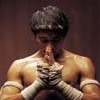 Our way of saying "thanks" in the Thai way. Here a nak muay Thai (kickboxer) offers respect and thanks for his teacher (wai khru) before a match. This is our local variation on the ubiquitous "hat tip" used in general blog culture.
A r c h i v e s

N e w s H e a d l i n e s
This Day in History
Website content
provided by The Free Dictionary
B l o g s

Tibet Blogs


Aqua's Dreamscapes
Beijing Wide Open
Chinese occupation of Tibet
kuala lumpur for a free tibet
Letters to the West
Life on the Tibetan Plateau
Meyul: in Exile
Precious Metal
RFA Unplugged
Shadow Tibet
The Interdependent
The Secret Tibet
The Soul of Tibet
TIBETSPACE
Tibet Talk
Tibet Will Be Free
Tibetan Studies Resources Blog
Tibetan Uprising Movement
Tibeto-logic
Voice for Tibet
Asia Blogs
2Bangkok 20 Alpha 4
American Expat in SE Asia
asiapundit
Beyond Wallacia
Burma Dialogue
Burma Digest
Burmese Bloggers without Borders
Burma-Myanmar Genocide 2007
China e-Lobby
Daai Tou Laam Diary
Far Outliers
Flaming Peacocks
Indonesia Matters
Jiwa Merdeka
Kaung Kin Ko
Macam-Macam
North Korea zone
Radio Free Nepal
Registan
Rule of Lords
Sarasonteh
Simon World
VietPundit
Iraq Blogs
HammorabiHealing Iraq
In the Red Zone
Iraq at a glance
Iraq Blog Count
IRAQ THE MODEL
Iraqi Bloggers Central
IraqPundit
The Messopotamian
Michael Yon : Online Magazine
Treasure of Baghdad
Middle East & the Stans
Across the Bay Afghan Warrior
Amarji - A Heretic's Blog
Big Pharaoh
Lebanese Political Journal
Martin Kramer's Sandbox
Muslims Against Sharia
Regime Change Iran
The Religious Policeman
SMCCDI
Syria Exposed
General Punditry
Belmont Club Best of the Web
Tim Blair
Blue Crab Boulevard
Chequer-Board
jules crittendon
Currency Lad
Democracy Project
Galley Slaves
Gateway Pundit
Victor Davis Hanson
Hot Air
INDC Journal
InstaPundit
Jihad Watch
Just One Minute
Oliver Kamm
Little Green Footballs
Llama Butchers
Mark in Mexico
Michelle Malkin
The Missal
neo-neocon
New Sisyphus
NormBlog
Oxblog
Power Line
protein wisdom
Publius Pundit
Doug Ross Journal
Sane Nation
Seeker Blog
SEIXON
Roger L. Simon
Solomonia
Stormbringer's Thunder
Don Surber
This ain't Hell
TigerHawk
Michael J. Totten
Winds of Change
ZenPundit
Eurotopia
Barce Pundit Davids Medienkritik
EuroPundits
Fjordman
Harry's Place
Iberian Notes
No Pasaran!
Zacht Ei
Can Con
Angry in the Great White North Autonomous Source
bob tarantino
Canada Free Press
Andrew Coyne
Damian Penny
Dust my Broom
Peaktalk
The Shotgun
small dead animals
Inkless Wells
Toons & Satire
Cox & Forkum Day By Day
iowahawk
Scrappleface
WuzzaDem
Media Watchers
The American Expat Backspin
Biased BBC
The Command Post
The Corner
The Daily Ablution
Diary of an anti-chomskyite
Hit & Run
HonestReporting
Oh, That Liberal Media
NewsBusters
PirateBallerina
Radio Blogger
Radio Equalizer
USS Neverdock
T i b e t
His Holiness the 14th Dalai Lama Tibetan Government-in-Exile
Tibet Information Network
Tibetan Committee for Human Rights and Democracy
International Campaign for Tibet
Canada-Tibet Committee
Phayul News
Australia Tibet Committee
Tibet Justice Center
Tibet Daily
Tibet Online Resource
Virtual Tibet Library
Dreams of Tibet
S o u r c e s
Memeorandum Snopes: Urban Legends
BBC | Monitoring
MEMRI
SITE Institute
A s i a P a c i f i c
Yahoo! News Asia The Jakarta Post
Paras Indonesia
Metro TV News Online
The Nation
Bangkok Post
Democratic Voice of Burma
Irrawaddy News
Mizzima News
BurmaNet News
Burma NewsLadder
Southeast Asia News
Sydney Morning Herald
The Australian


 Home
Home
Agam's Gecko

Wednesday, May 27, 2009
THE LADY TESTIFIES
 Daw Aung San Suu Kyi enters the court-within-a-prison on May 20, 2009 in this screenshot from Burmese state television. Photo: MRTV |
| Y |
esterday Aung San Suu Kyi was permitted to testify in her own defence for the first time since her trial opened ten days ago. On May 15 she was taken from her home where she had been confined for the past six years (following the Burmese junta's last attempt on her life in May 2003 in a mob attack on her convoy). She was delivered to Insein Prison, charged with meeting an illegal intruder on her property, and has since been held at a special quarters within the prison. The trial began the following Monday, May 18 in a specially-built courtroom also within the prison.
Today her term of home detention expires. In truth it expired on May 27 last year, but at that time the junta illegally extended it for a year longer than is permitted by their own laws. The military rulers must have now run out of excuses (they always like some sort of quasi-legal cover for their lawlessness), and couldn't reuse whichever fig-leaf they hid behind last time. The Lady's house arrest is really over.
One of her lawyers, Nyan Win, told Mizzima that Police Brigadier General Myo Thein, along with Burma’s Police Chief Khin Yi, on Tuesday morning read out an order removing restrictions imposed on Aung San Suu Kyi under her former sentence of house arrest.It would be nice to believe the junta is beginning to grow up at last, but I don't think so. Even the claim that they were considering her release earlier this month, but were so rudely interrupted by the loon who swam into her compound, is disingenuous. This announcement points to only one thing, which many Burma-watchers have already taken for granted: the verdict is guilty (and has probably already been delivered to the judge).
Than Shwe has more than likely been making extra offerings to whichever spirits he was appeasing in early May. The American intruder, John Yettaw, was a godsend for the ageing and increasingly demented dictator, who is most well known for his extreme superstitions. There is no plausible scenario which could have led to a brand new term of detention or imprisonment for Suu Kyi, given that she was absolutely isolated from outside contact, except this one. There was no possibility for her to break the conditions of her detention. An intruder was required.
There is no evidence that Yettaw was encouraged to pull his stupid stunt by any of the plentiful undercover state intelligence agents working in Rangoon, many of whom can probably be extremely personable and earnest fellows wishing to practice their English. The fact that he pulled the same stunt in November last year (on that occasion she had no contact with him, thanks to her living companions); the fact that he then successfully swam the lake for his escape; and the fact that his intrusion was reported by Suu Kyi to the authorities who then took no action to beef up their security around her home — none of these facts should make anyone suspicious. Of course not.
As she testified yesterday and today, the intrusion was caused by poor government security, for which she had no responsibility.
"Even though the main cause of the situation that has happened is a lack of, or a breach of security [at my house], no action was taken on those responsible for the security," Suu Kyi told the court.Burma's soldier-government is not known for its understanding of logic. She was a prisoner, her home was her prison. Prisoners have guards to keep them from getting away. If some kook breaks into the prison, whom shall we blame? The prisoner sitting in her cell? How about the sleeping guards outside?
"But only I am under prosecution and such an act is unjust."
She may have played into the junta's hand by not immediately reporting the intruder, but I wonder how she might have done that. When she wished to tell something to the authorities, the only way was to pass the message through her personal doctor, who came on regular visits. She is allowed no phone, and can't even send mail. But the doctor had already been (conveniently?) arrested by the police. I'm not making accusations, just rolling my eyes a bit over here.
A nice anecdote from yesterday's "court" session, at which some diplomats and journalists were permitted, is offered by the account in Mizzima News. Usually one should stand as a sign of respect for the judge...
Diplomats and other invited guests stood up as a sign of respect as she entered the courtroom, prompting security personnel to remind them to sit down.The Irrawaddy has a fuller account of yesterday's testimony by Suu Kyi here, and today's testimony here.
If there can be said to be one thing that is exemplified by The Lady (Burmese for years have referred to her this way, or simply as "Aunty" due to the risks in actually saying her name out loud in public), that one thing is Freedom From Fear. From her book of the same name:
Via The Interdependent I learn of a new documentary film about The Lady and her country. Here's a sample of how it looks:"It is not power that corrupts, but fear.
Fear of losing power corrupts those who wield it and fear of the scourge of power corrupts those who are subject to it."
[note: I use this version as the picture is much sharper than the YouTube one. It's also a little wider, so if your browser window is too narrow and there's nothing below this, please scroll down past the sidebar and you'll see it.]
.
Labels: Burma
Sunday, December 21, 2008
JUST WORDS
| N |
ot much in the way of free expression gets by censors in the military dictatorship of Burma. Occasionally a slip-up occurs, as when the New Light of Myanmar published a photo of protesters in London in October 2007 (shortly after the violent crushing of the monks' peaceful protests). The picture was labelled "an anti-Iraq demonstration" (presumably they meant "anti-imperialist-war-for-oil-in-Iraq demonstration"), but the censors missed the visible signs expressing "Support the Monks" and "Free Burma."
In early 2008 a love poem was published in a Burmese magazine, ostensibly for Valentine's Day. Only after the magazine had been on sale, did anyone notice that by vertically reading the first character of each line, the message actually said "Power Mad Than Shwe" (Burma's crazy superstitious dictator). The magazine was closed down, and I'm sure there are people still in prison for that one.
So it was with great interest that I read the newest offer from the Washington Post.
WashingtonPost Media is at the epicenter of the inauguration, and the Classifieds team is giving readers the chance to send a personal message of congratulations to President-Elect Obama that can be read by millions.The ads will cost only $5 per line, with a two-line minumum. The Post expects to rake in around 3000 ads in this endeavour. But wait, that's not all.
All messages must be placed by 6:30pm on Friday, January 16th. All ads must be congratulatory in nature.That sounds like a challenge. Human nature, rule #1: If you tell people not to do something, many of them will want to do it for that reason. Of course the Post has the right to accept or reject anything it wants, and we'll see if their ad checkers are as sharp-eyed as Burma's publishing standards officers.
I don't know whether Jim Treacher knows the story of the forbidden Burmese love poem, but here's his congratulatory ad for The One:
Gratefully, everyone told Bush, “Enough.” New times! Change! Obama makes me incredibly elated!I guess the Post's ad checkers have their work cut out for them. Hopefully they'll be reading each one upside-down, in the mirror, and maybe even putting them through anagram generators!
I'll be in Jakarta next week, see you when I get back.
.
Friday, August 08, 2008
AN IMPORTANT DAY
 Tens of thousands filled Rangoon's streets on August 8, 1988 to demand democracy for Burma. |
| T |
he date is 8-8-08, a very important date. The people of Burma, around the world and in their own country, are marking the 20th anniversary of a momentous democracy uprising in their country. (Apparently, there is also some sort of sporting event going on someplace, hosted by the regime which consistently protects the Burmese military junta, keeping it in power to this day.)
At the time the military took control of Burma in 1962, it was considered one of the most developed countries in Asia. By the mid 1980's, it had attained the United Nations status of a "Least Developed Country." In 1987 the superstitious dictator, Ne Win, demonetized currency notes over 10 Kyat, wiping out most people's savings overnight. Ne Win loved the number 9 the way Chinese love the number 8 -- all currency would henceforth be based on multiples of 9.
Protests began shaking the dictatorship, and in July 1988 Ne Win resigned -- assigning a "particularly bloody henchman" to take over. Students at the Institute of Technology protested on their campus and one was shot dead. As the former British Ambassador, Michael Morland recalls, a spark was lit.
Upheaval quickly followed; students and workers announced a general strike as well as a demonstration to commence at the 8th minute of the 8th hour of the 8th day of August (the 8th month) 1988. Thousands and thousands of people mightily fed-up with the years of calamitous miss-rule took to the streets simply to demand democracy – some thousands of those people would pay with their lives.The 8888 movement was the birth of a new consciousness among Burma's people, but the day did not completely belong to them. Sai Win Kyaw was a captain in the Tatmadaw (Burmese Armed Forces), and was among those forces called back to Rangoon to quell the uprising. He was stationed near the US Embassy, and recalls that other troops near City Hall began shooting protesters just before midnight on that day. His troops were called in to clean up the carnage as fire engines washed the bloodstained streets.
 Please note the fixed bayonets. |
Sai Win Kyaw saw a schoolgirl holding a portrait of independence hero Gen Aung San suddenly drop when the first bullet hit her. Then other people started falling. "I will never forget that moment," says the former officer, who joined the Defense Services Academy when he was just 18.The killings went on until August 12, not only in Rangoon but throughout Burma. An estimated 450 officers and soldiers broke ranks, Saw Win Kyaw among them, crossing the line to join the protesters. These continuing defections may have prompted the army to hit hard on September 18. Thousands were killed, Saw Win Kyaw was among those arrested and tortured. He now lives in exile in Thailand.
He began to question why these unarmed people were being killed. "Why were such harsh measures being applied to deal with this kind of situation? I couldn’t understand it." From then on, he says, he stopped taking pride in being a soldier.
The August protests had caused the removal from power of the new leader, U Sein Lwin. The New York Times reported on August 14 that calm was returning to the capital. Familiar methods were used to prevent information from getting out.
Accounts by witnesses of the Burmese crisis have declined since midweek, when the Government ceased issuing tourist visas. Since the turmoil began, Burma has become particularly vigilant in barring the entry of foreign journalists, who have in the past entered the country as tourists.
Tourists arriving in Bangkok from Burma said the people who joined in the protests this week were jubilant. But it was not known how the protesters might direct their new-found political power. The Government said 95 people were killed this week in the unrest, although reliable but unofficial reports have put the death toll in the hundreds.
 |
The Irrawaddy Magazine has more, in Commemorating 8.8.88.
Another uprising for democracy was begun one year ago with small scale protests which were quickly quashed by the successors of the earlier murderers. Buddhist monks picked up the torch and marched in their tens of thousands, growing into hundreds of thousands by September. This too was put down with ruthless violence. Any serious United Nations response has been prevented by a non-democratic country with a Security Council veto. That country is currently holding some sort of party.
A new generation of Burmese remembers what happened 20 years ago, although some of them were not old enough to experience it directly. They call themselves Generation Wave, and they're planning to paint the town red, in memory of the massive loss of life.
Many around the world will be joining them in a Global Day of Action today. Join with them too, at the nearest Chinese and Burmese diplomatic mission. Details here.
.
Labels: Burma
Saturday, June 07, 2008
KILLER JUNTA STEALS AID, EVICTS REFUGEES, MURDERS MINORITIES: SITUATION UNCHANGED
 Surviving in Bogalay. Photo taken May 25, 2008. Photo: Myanmar NGO Group |
| T |
here was some apparently unfounded optimism expressed on this page after Ban Ki-moon's unexpected "breakthrough" with Than Shwe on May 23. If such a massive cataclysm could not shake the generals awake, and the international fury at their refusal to permit the "Mercy Fleet" to save lives would have no effect on their pig-headedness, then even the hope that Than Shwe's word could mean something was a foolish one.
Many of the international aid workers who had been twiddling their thumbs in Bangkok for weeks, anxious to get inside and get their operations under way, were grudgingly granted entry visas as promised. But everything is now being done to ensure they stay stuck in Rangoon and out of the delta. The junta's mouthpiece "media" insults the world's compassion, screaming that "we don't need your chocolate bars!" (which are not given, but the high energy biscuits can save many lives). "We can take care of this ourselves, our refugees can eat frogs!" (I'm not kidding!)
Burma's rulers care nothing for their own laws. Laws are for the slaves, not the masters. Aung San Suu Kyi has been under detention for five straight years, the legal limit for detaining anyone without trial or charge. Her detention order was extended another year.
The propaganda masters are insecure when presented with actual journalism, and so denounce independent field reports as "insulting". Down in the delta, communities are now struggling with the predicted disease outbreaks.
Citizens' efforts to bring help to their fellow citizens are blocked at every turn by the army, and the victims are seen by their rulers as a merely a group which brings damage to the country's reputation. One of the most successful of these citizens' efforts was led by popular comedian Zarganar (his stage name means "tweezers"). Jailed for offering food to monks during the democratic uprising in September, now he's arrested for feeding cyclone survivors.
The junta's intransigence has forced the French aid-bearing ship to sail after weeks of waiting, and now the US ship has headed off too. These ocean-borne facilities could have saved thousands of lives, but the generals' stupidity has killed them instead. It insists the relief effort phase (saving people) has finished, and the reconstruction phase (building new stuff) is what they're concentrating on now.
The people who need the help are evicted from relief centres (and their aid is stolen), sent back to their non-existent homes. Or, they can get arrested -- it's up to them!
But what would they do to survive, in their destroyed towns? If they want some emergency disaster assistance, they will have to work for it. Forced labour is nothing new for these generals, it's been a reality in Burma as long as they've held power.
You're a cyclone refugee? Lost half (or all) of your family? Want to eat? You'll be working on the reconstruction projects that will make the generals, their cronies and families even richer. Working for survival, not for pay. It's slavery, what else is it? Senior-General Than Shwe and his fearful, yet adoring clique are not good at very much, but they are masters at being masters. Every citizen can be made a slave.
Schools in destroyed towns have re-opened, but where are the children? Meanwhile, the spoiled children of the ruling elite can sometimes have other problems. That's the son of a very top ranking general, chief of the Bureau of Special Operations. Perhaps his son's arrest is an indicator of something more, we'll have to see. It seems sometimes that only a split in the army could possibly save this country.
 Senior General Than Shwe, international criminal, wanted for crimes against humanity. |
Aung Lin Htut, formerly the deputy chief of mission at the Burmese Embassy in Washington, described to a radio station how 81 people, including women and children, were shot and buried on an isolated island after straying into a remote military zone in the southeast of the country in 1998.The families had been on Christie Island, in the Mergui Archipelago, gathering wood and bamboo when a military patrol landed there, commanded by Burma's current Minister for Electric Power, Col. Zaw Min. He is now also the leader of the USDA, the junta's civilian thug militia.
The families the patrol found working on the island comprised 59 people; a request for orders from headquarters was answered -- "Eliminate them." An air force general hesitated over the order, and was told it came from "Aba Gyi" (the "Great Father"). That's Senior-General Than Shwe himself.
Only days later, a Thai fishing vessel came too close to this military zone. Twenty two Thai fishermen were apprehended, executed, and buried on the island. Aung Lin Htut was then a military intelligence officer, later to be purged along with then Prime Minister (and formerly the head of military intelligence) Khin Nyunt. He sought asylum in the US in 2005, and has not spoken of the regime until now.
It's a horrible case, but Burma's recent history is full of such horrible cases. Summary execution, grisly torture, forced labour and forced population displacement, forced military service for children -- these are the bread and butter for this despicable junta. The humanitarian crisis brought on by the cyclone provided an opening for the world to finally do something about it. But the world's collective wisdom said, "It's too hard."
Another in a seemingly endless string of such reports shows that the genocidal campaign against the Karen of eastern Burma has not diminished, cyclone or no cyclone. The Karen are forced out of their villages (just like cyclone survivors are forced out of their meagre shelters) and put into forced labour camps. Their villages will be torched, and they'll be porters for the army -- if they're lucky. If not, one can be chosen to be a human mine sweeper, so better not complain about it.
Read this translated Burmese blog article by Burmese Bloggers Without Borders. It's a captioned photo essay on those who are suffering the results of the cyclone, and those who are enjoying them. See where the nice tents and generators and water purification equipments are being used, and where they aren't.
I haven't provided links for all my assertions in this article, but if you can stand any more, just browse over the websites of Burma's independent journalists, many of whom are continuing to take great risks in getting the truth out to those of us outside the junta's control. It's all there, and more.
Democratic Voice of BurmaYou may wonder how much more the people of Burma can take. I'm wondering how much more we can take without doing something about it.
The Irrawaddy News Magazine
Mizzima News
.
Labels: Burma
Friday, May 23, 2008
SECRETARY GENERAL MAY HAVE SUCCEEDED
| F |
antastic news, if it pans out. UN Secretary General Ban Ki-moon has been meeting with Senior Dictator Than Shwe in his hideout at Nay Pyi Daw today. Just over the wires: Than Shwe has agreed to allow in 'all' aid workers to help the cyclone survivors.
"He has agreed to allow all aid workers," said Ban, who is on a mission to convince the reclusive military government to permit more foreign relief expertise three weeks after the cyclone struck, leaving nearly 134,000 dead or missing.I fervently hope this is true. Thousands and thousands of lives are depending on it. AP also has the story. Both those links will be updated with further information as the day progresses.
Asked if this was a breakthrough, Ban said: "I think so."
Well done Mr. Ban Ki-moon! Let us just hope there are no devils in the details. Get those visa stamps warmed up, Burma embassy. There are a lot of people over here raring to go!
.
Labels: Burma
Thursday, May 22, 2008
WORLD'S TOP DIPLOMAT TRIES DIPLOMACY WITH JUNTA
 Children reach out for used clothing from a local donor at a village destroyed by the cyclone, May 12, 2008. Photo: REUTERS / Stringer |
| S |
ecretary General of the United Nations Ban Ki-moon is now in Burma, expecting to meet with chief dictator Senior General Than Shwe with hopes of changing his mind about saving the lives of hundreds of thousands of his own people. It will be an uphill battle for the Korean diplomat.
Part of his itinerary for today was a tour of camps and shelters in the delta, but the survivors there say they hope he won't be visiting them. Strange?
Not with this military junta, it isn't. Wherever he goes, it will mean increased security and intimidation for those who still continually need to find food, water and shelter. The reality is in such sharp contrast with the televised propaganda, that reality must be altered to fit.
With another high-level visit on the way, cyclone survivors are saying "No more visits!" said Zarganar, who is now actively involved in the relief effort.Zarganar is Burma's best-known comedian, and heavily involved in the private relief efforts. A Burma analyst based here in Thailand, Aung Naing Oo, said that for the regime, security comes before assistance.
Before the arrival of any VIP guests, more soldiers are deployed and security guards clear roads, he said. Meanwhile, cyclone survivors who are already without sufficient food and relief supplies are now concerned that their rations will be cut because private donors will be unable to visit them during the UN secretary-general’s visit.
"The regime will clear roads and the surrounding areas when Ban is scheduled to visit," he said. "People who are begging from dawn to dusk will not get food or money to survive during his visit."Hopefully the Secretary General has some plugged-in advisors with him so he's made aware of this aspect to his visit. He was taken to Shwedagon today, and then flown by helicopter to selected sites in the delta. In a meeting with Prime Minister Thein Sein, he was told that the junta's "relief phase" is now ending!
Actually, the "relief phase" hasn't even gotten properly started yet, with barely a quarter of those in dire need having received any help at all in the 20 days since the disaster began. But Ban was given a taste of the junta's priorities right off the bat.
Security for the secretary-general's visit was heavy, with dozens of armed riot police dotting the road from the airport into the city.To make sure there were no visible "beggars" around to be seen by important people, which would have been "disgraceful."
As described earlier, the military authorities have been evicting people from shelters set up in monasteries and schools in Bogalay, with the choice of either going back to their devastated (often non-existent) villages or going to camps with no help whatsoever.
On May 19, four boats transporting several dozen refugees back to their wiped out villages sank in a storm on the Irrawaddy River. It's not known how many, if any, were rescued. The refugees had originally travelled to Bogalay in search of food, shelter and water. Officials had given each family the equivalent of $20, and told them to return home.
The junta is cracking down once again on its beleaguered people. On May 18, residents of Kawhmu division in Rangoon lined up in the streets when private donors came to distribute aid.
"The local authorities said it was a disgrace for them to come out and beg like this, and the people said they were begging because they were starving," one Rangoon woman said.Eighty people were taken into custody, while 200 were sent to a local monastery which had not enough supplies to feed them. They were then moved to a school, which also had no food.
Local authorities in Rangoon have now used loudspeakers to warn all residents against going out in search of aid and have distributed posters saying that begging for aid is disgraceful, the woman said.If "begging" for aid is disgraceful, how much more disgraceful is refusing to accept the aid and manpower now waiting idle in Bangkok, or ready in massive quantities on ships now within sight of the devastation zone? The above-linked page has a video of current conditions in the delta.
 Children queue up for clean water outside Rangoon, May 16, 2008. Photo: AP |
For the Burmese junta, the "storm of plots and intrigues" facing the country is "much worse than the cyclone Nargis". The statements appear today in the state newspaper New Light of Myanmar, in an article that reiterates the denial of aid carried by the U.S. Navy. The warning expressed in the regime's newspaper refers to the accusations brought by the international community that the government is not responding adequately to the needs of the population. According to the newspaper, this is only a matter of "rumour storms created by certain Western countries and national traitors".As the UN Secretary General was arriving, the regime was arresting prominent opposition leaders. Last weekend, they apprehended nine local journalists in the delta and held them for interrogation. They were released after being forced to sign agreements never to come back.
Some parts of Rangoon had their electricity restored within a few days of the cyclone, after bribing electricity officials. But other areas are still without power; coincidentally enough, these are areas which were known to have supported the monks last September. Perhaps Mr. Ban could look into this.
Everyone from travel agents to comedians are pitching in with the ad hoc relief efforts, despite the junta's obstruction of even these modest efforts. And of course the Buddhist monkhood is once again showing who is really on the people's side.
Monks from well-known monasteries in Mandalay and elsewhere in Burma are either in the delta or heading there, while in Pakkoku — the Irrawaddy town near Mandalay where last year's protests originated — their brethren are reportedly soliciting donations for cyclone victims. Shwe Pyi Hein Monastery, which already runs a free clinic in Rangoon, has dispatched five volunteer doctors to the disaster area, who are treating more than 100 people every day.People are seeking refuge wherever they can find some, such as an old wooden schoolhouse with its own roof partially blown off. But what nature didn't finish, the junta just might. That school is to be used as a polling station this weekend, and the refugees are being forced out.
The "referendum" is on for this Saturday in the Irrawaddy Delta and Rangoon; whatever happens won't affect the outcome, as the junta has already announced its overwhelming victory.
Tell these people about "victory."
In a big pavilion — a flat expanse of concrete under a green sheet roof — also on the outskirts of Yangon, dozens of homeless were packing up.A group of Burmese monks are in Jakarta to urge Indonesia to back a UN resolution allowing free flow of aid into their country.
About 100 old people and children put their stuffed canvas sacks and bags on the benches in the middle of the hall. Some people sat on the floor. Others were out on the road, waiting.
A half hour later, they were gone.
A green banner was being put up in front by men, apparently security personnel in plainclothes, along with polling tables inside.
One of the monks had fled the country after the violent crackdown last September, and described how he saw soldiers kicking the heads of other monks at Shwedagon Pagoda, and also witnessed three of the monks killed by the soldiers.
Another of the visiting delegation, which testified to a meeting of the Indonesian parliament's foreign affairs commission said around 10,000 monks were arrested during the crackdown, adding that the military junta is illegitimate and that Indonesia has some responsibility to help Burma's people in the present crisis by pushing for the UN resolution. And don't forget the last crisis, man-made and yet unfinished.
"The problem is we don't know many monks have been killed, we don't know how many monks are missing. What we know is thousands of monks are suffering in interrogation centers and forced labor camps across the country," he said.In Rangoon's South Dagon township a private donor came to give rice and clothing to cyclone victims on Tuesday night. Local authorities told the people they were only permitted to receive the assistance if they had the right "cards." A child asked for a "card" and had his hand broken as he was shoved out of the way. A dispute broke out.
"The people threatened to beat up [the authorities]. Then the Union Solidarity Development Association joined the authorities and beat the people up."Preparations had been made in Bogalay for the Secretary General's visit. While real cyclone victims lacking basic survival needs are forced to return to devastated villages, fake refugees are taking their place. A private donor who returned from the area said the same situation exists in other parts of the delta.
According to residents, three men and a pregnant woman were hospitalised in the fight.
When other refugees and ward residents surrounded the authorities, police and township officials were called to the scene, but the crowd refused to disperse.
The angry people eventually left after military forces were called in and imposed an 11pm curfew, reportedly telling residents that anyone who had not gone home by then would be arrested and shot.
"[The authorities] want to show the international community that there are no refugees here."The Secretary General has an appointment with Than Shwe tomorrow. On Saturday the regime will conduct its illegal-to-oppose "referendum" in the most devastated areas, which didn't vote on May 10. And on Sunday, a donors' pledging conference will be held in Rangoon -- the same day Aung San Suu Kyi's detention order is due to be renewed for another year.
The donor said they wanted the refugees out in time for United Nations secretary-general Ban Ki-moon’s visit to the area.
"They are replacing them with fake refugees and when people do interviews, they let them see these people," she said.
"I saw them myself. They are paid at a rate of 1500 a day. They admitted to me that they are pretending to be refugees because they get the money."
.
Labels: Burma
Monday, May 19, 2008
BURMA REFUGEES EVICTED; JUNTA STILL IN DENIAL
 Buddhist monks from Burma begin fasting at UN headquarters in New York on May 15,2008, hoping to push the UN into providing sufficient, immediate aid to their country. Photo: AP / Seth Wenig |
| T |
raumatized Burmese cyclone survivors are seeing and hearing restless ghosts in the night, crying out for help. But it isn't these survivors who are losing touch with reality -- the ruling junta seems to be living in a different dimension altogether. How out of touch are they?
"We have already finished our first phase of emergency relief. We are going onto the second phase, the rebuilding stage," state television quoted Prime Minister Thein Sein as telling his Thai counterpart this week.The "relief phase" is complete, is it? And people who see things differently are to be arrested, are they? These guys and the Chinese regime in Tibet are sounding more alike every single day. A cyclone victim and member of the National League for Democracy made an attempt to meet with UN officials in Rangoon.
At 4’oclock this evening, Daw Khin Win Kyi was arrested for attempting to tell the sufferings of refugees to senior government officials, diplomats and UN officials who were inspecting the living condition of storm victims with 15 other women, a local resident told DVB.Anyone who claims that everything is not progressing in a quite excellent fashion, will not be tolerated. Don't have any shelter over your head? That's not in our field of responsibility.
"She wanted the senior officials to know the sufferings of the people and wanted to tell them face to face and went to wait at the route of the official entourage. She told officials at Ward – 17 to let her see the senior officials, and the police told her that they could not let her in, and a shouting match followed. Then, the police sergeant punched her, dragged her away and handcuffed her."
At nearby Daw Pon, refugees who were sheltering in a storehouse were also driven out into the rain, a refugee said.A resident of Pyapon, in the Irrawaddy Delta tells Radio Free Asia that many rural areas have yet to see any foreign aid. The authorities are concentrating on assisting military families, although the state-run television shows officials, even the Prime Minister carrying dried noodles. Doesn't this reach those in need?
"We told them that we have nowhere to live. They said, you can go anywhere you like. If you don’t, we will ask the army to remove you tonight, the ward authority chairman Nay Lin Aung said to us."
Interviewee: No, Sir. The dried noodles that they said was unloaded from the helicopters turned out to be dried noodles from Win Thuzar store, the kind that’s worth 50 a packet. We’ve only seen that kind. General Maung Maung Aye’s brother, Ko Soe, died in the storm. The aid goes to them. Their relatives get rice bags. That’s all they do. They don’t do anything for the general public.Like the aid from the people of Thailand, re-labeled as the generous donation of Lieutenant-General So-and-so, most of the "official help" the Burmese people are shown on their media is completely faked, and it's been that way since the day after the storm.
Interviewer: Are they giving these things free or selling them?
Interviewee: They’re still unloading from the helicopters. There’s no plan to distribute them to the people. We’ve only seen them helping the military families, like the relatives and siblings of 55th and 66th division commanders.
Interviewer: So what’s the situation with the victims?
Interviewee: The victims are just waiting for groups that would like to donate. The USDA is not doing anything. There are no groups from the State.
"They’re faking it everywhere. They fake it by video taping, and then leaving that area. They’re just looking for an opportunity to video tape when authorities come. People are suffering from the storm. They are building elaborate stages, with velvet backdrops, and writing things like who is donating what for the storm victims. They want to make it elaborate. They don’t actually look after the people who are suffering. The generals are on these stages, looking grand, with guns around their waists."In the government's storage depots around Rangoon there are huge stocks of rice, hundreds of thousands of bags. Is this for the hungry displaced survivors?
Interviewee: That’s for export. The company owned by Aung Thet Mann, son of Thura Shwe Mann, is doing that. It’s not for distribution to people.Burma's state-run media nearly doubled its reported number of dead and missing on Friday, to a combined total of around 135,000. Aid delays and obstruction, and a confirmed oubreak of cholera could push the figure much higher. But the junta proudly boasted of a 92.4 % "win" in its sham referendum on May 10, while forcing thousands of displaced people out of their temporary shelters.
 A man, three children and their best friend take refuge at a monastery near Rangoon, May 16,2008. The displaced are being forced out of such refuges by the military junta. Photo: AFP |
So far, more than 300 storm victims have been placed without food or other assistance in a refugee camp on Mein-ma-hla Island, despite a build-up of privately donated rescue aid and food supplies in warehouses and Chinese temples in the city, Burmese sources said.Emergency, life-giving help was used as currency to "win" the junta's "referendum." A man from Bogalay described the barter system.
The man added that when teachers from Than Lyin asked the authorities to help them with roof repairs, they were told they could have rice and other assistance in return for "yes" votes in a national referendum, from teachers, students, and their entire extended families.But this was going on not only in the remote places, and not just over something to eat. Do you want to keep your job?
"My older sisters have to stay at their schools," the Rangoon woman said. "The education directors have told them that they’d have to vote yes. They said they’d have to vote yes, and they’d know if they had not. They had all the lists," she said.The notorious USDA has been seen selling bolts of waterproof canvas to the Chinese shops in Bogalay, to be sold on to those desperate to get out of the continuing downpours. The material is obviously from foreign donations. In Rangoon's Chinatown and other city markets, foreign-donated mosquito nets and food are being sold for profit.
"All the staff members had to be on their side."
The military has tightened the security ring around Rangoon, redoubling their efforts to make sure foreigners don't see what's going on. It makes me wonder how my friend, who scored a visa to get in last week, is doing. If one wants out of the city, it would appear you'd need to smuggle yourself like a sack of contraband.
Even a reporter who was heading north out of the city, in the opposite direction from the delta, was told, "Foreigners can't go this way," at a police checkpoint.
The junta has banned the importation of much needed communications equipment, as its children begin to starve.
The U.N. report said all communications equipment used by foreign agencies must be purchased through Myanmar's Ministry of Posts and Communications — with a maximum of 10 telephones per agency — for $1,500 each. Importing equipment is not allowed.The Save the Children aid agency said yesterday that thousands of young children are facing starvation without some very quick action.
"We are extremely worried that many children in the affected areas are now suffering from severe acute malnourishment, the most serious level of hunger," said Jasmine Whitbread, who heads the agency's operation in Britain. "When people reach this stage, they can die in a matter of days."British Prime Minister Gordon Brown told the BBC, "This is inhuman." Burma's state-run television played scenes of generals comforting relaxed people inside sparkling new tents, and three locations were prepared for a staged show for diplomats ferried in by helicopter to see the progress. US Ambassador Shari Villarosa said, "It was a show. That's what they wanted us to see."
Starvation is only the beginning. In a weakened state, the young ones are prone to pneumonia, given that without shelter they can't even get dry. It will be wet for the next few months; cholera, dengue fever and malaria could explode. Burma's health system, the second worst in the world, can't possibly cope with this crisis.
The French Navy ship FSS Mistral, carrying 1,500 tons of food and medicine, equipped with doctors, helicopters and small boats capable of penetrating the hardest hit delta areas, is now in sight of the devastation zone. The junta refuses to allow it to do anything. France's UN ambassador, Jean-Maurice Ripert says the refusal "could lead to a true crime against humanity." He was interrupted during a closed meeting of the UN General Assembly by Burma's representative, who accused France of deploying a "warship" to his country.
The junta insists the French aid be unloaded in Rangoon, in order that it can be reloaded onto small trucks, which require teams of men to push them to get them started (and then presumably driven to warehouses where the best stuff can be taken by the military for its own use or sold for profit). Ripert called this detour "nonsense" and "unacceptable." Burma's ambassador was not available for public comment.
France has been pushing for UN Security Council authorization to deliver help to the afflicted, but it is being blocked by China, Russia, South Africa and others. Invocation of the Responsibility to Protect is limited to "crimes against humanity" such as genocide or ethnic cleansing. Ripert says this is because no one ever contemplated such a situation as they face today.
"It's true ... that natural catastrophes were not included because at the time nobody thought that any government would dare to refuse some help to its own population in case of natural catastrophes," Ripert said.An emergency meeting of ASEAN foreign ministers is taking place today to consider the issue. (ASEAN has announced that it will be "taking the lead" -- whatever that means -- but will have "no uncontrolled access" -- and we do know what that means.) Senior General Than Shwe was coaxed out of hiding on Monday, and was seen on television touring some damaged areas.
The US military had been able to bring in 21 C-130 flights as of Saturday, about a week since the first flight was permitted. They're flying out of Utapao, on Thailand's eastern seaboard, and from an emergency headquarters at Khon Kaen, in the northeast. The UN believes 24 C-130's per day are required to meet the need.
 A child sleeps under a straw mat next to the road, near Rangoon on May 16, 2008 Photo: REUTERS / Stringer |
The foreign assistance bonanza may not only have been fueling greed (for profits, for referendum support), writes Crispin, but used as insurance against dissatisfaction by the military's rank and file. And some of it is even being sold outside the country.
[A Western diplomat] said that some foreign aid, particularly high-quality Western-made mosquito nets and blankets, have been diverted and are now on sale in neighboring southwestern China, where consumer purchasing power is stronger than in Myanmar. "The government is stealing aid on arrival," said the diplomat. "Many ministers see this as a pay day, a godsend, for greasing their patronage networks."For the military leaders who run this country, the current situation is more of a security crisis than a humanitarian one, says Crispin. The survivors who find themselves herded out of shelters run by monks or local volunteers and into ones run by the military, find themselves treated more as prisoners than as victims receiving a kind, helping hand. Ethnic minorities present in the affected areas are getting even shorter shrift.
Crispin also recalls the bizarre justification for inaction used by China at the UN last week, as it blocked more insistent efforts to use the UN's responsibility to temporarily override the principle of sovereignty.
Unfortunately that won't happen any time soon due to China's intransigence and veto power on the Security Council. During a UN session earlier this week, China's deputy ambassador made a spirited case against invoking the principle to force aid on Myanmar, arguing preposterously that nobody invoked the principle when France suffered from a recent heat wave which killed thousands of its citizens.I wonder if he made that preposterous argument before or after the earthquake.
A few air-drops into a desperate region under the control of a potentially hostile military will do no good, and may make matters worse. It's clear that the UN is powerless, with China and Russia tying the hands of the Security Council.
A "coalition of the compassionate" is the only hope left for many hundreds of thousands of people now left sick and hungry, and out in the monsoon rains. I see no logical argument against Crispin's conclusion, that only the US military has what it would take to carry this off. Surely every civilised country would be with them in the effort.
.
Labels: Burma
Wednesday, May 14, 2008
STEALING MEDICINE FROM THE SICK, FOOD FROM THE HUNGRY
 Villagers try advertising their need, on a road near Kundangon on May 11, 2008. Photo: Reuters / stringer |
| A |
new tropical cyclone appears to be forming, and heading straight into the devastated Irrawaddy Delta in the next 24 hours. (The Joint Typhoon Warning Center will either issue a formal warning or cancel the alert later tonight). News of the second cyclone has not been passed on by Burmese state-controlled media, but some residents have heard it on foreign radio broadcasts.
The junta has given permission for a Thai medical team to enter the delta on Friday. They will be the first foreign team allowed into that area. His Majesty the King spoke of the disaster last night, telling the workers of a charitable foundation under royal patronage that the Thais should do their best to help others, regardless of superficial differences. But, he said, hardship will prevail if people in need of aid did not receive assistance offered by other countries. He did not mention any particular country by name.
The Burmese authorities have consented to attending an emergency ASEAN foreign ministers' meeting in Singapore on Monday. Thai PM Samak left this morning on his off-again, on-again mission of persuasion to Nay Pyi Daw. I hope he has some luck finding the reclusive Senior General. Than Shwe isn't answering his phone.
Military familes are being helped before those who need it most, says a person close to airforce families at Mingaladon airbase, near Rangoon.
The anonymous woman told RFA as follows that some of the families from the Mingaladon airforce lost their roofs in the storm, and the engineering troops from GE unit put up new zinc sheets and made roofing and walls, as well as distributed food.Time officially ran out for many refugees today. No more cluttering up monasteries and schools -- it gives the country a bad name!
"They were distributing potatoes and tomatoes. If there were houses that got destroyed, they didn’t have to pay anything."
According to that person [who had been privately distributing food], the storm victims staying in monasteries and schools were being chased out from these places, and the deadline was this coming Wednesday [May 14]. Therefore, those who have not rebuilt their houses were crying.At refugee centres in other areas, this witness says the displaced have also been told to vacate the monasteries and schools by May 14. The order seems to apply to the entire country. She told RFA that the only rice seen in refugee camps is that given by private donors (when permitted). Food and clothing sent from abroad is not reaching them. Water purification supplies are very urgently needed.
Never before seen (in Burma) foods, donated by the international community, are not seen by the displaced cyclone survivors. But they are being seen by shoppers at City Mart. U Thuya has been organising private relief efforts, including food distribution and mobile medical services. In the areas they have been working, they've seen no sign of the foreign donations.
But the dried noodles that came from abroad, that we’ve never seen before, — you can now buy them at City Mart. Also, in Nyaung-bin-lay Market, I’ve seen cans of condensed milk that we’ve never seen before. These are the things donated by foreign countries. You can buy those packets of dried noodles. It’s 600 a packet. These dried-noodle packets were donated. I don’t know what happened that they didn’t get to the victims, but ended up in Nyaung-bin-lay Market and City Mart.A resident of Bogalay, in the delta, said government officials are providing some roofing materials on credit. Payments will be collected later. Other donated materials are simply taken by government supporters, and sold.
"I want to state clearly that the aid given by foreign countries has not reached the public and refugees," the resident said.I'm getting tired of hearing about those guys. They'll beat peaceful demonstrators over the head, and seven months later they're stealing their relief.
"Plastic sheets and medicines have not reached the victims either, they are being sold outside," he said.
"The sheets are being sold by soldiers and members of Swann Arr Shin and the Union Solidarity and Development Association."
In the devastated Labutta township, martial law has been (unofficially) declared. Outsiders are prohibited from entering the area, local people are banned from burying the dead, going to relatives in other villages, or even from searching for bodies (what possible justification for any of this?).
Fuel is very scarce. Although petrol was issued to township officials and SPDC members on the rescue team, they are only interested in salvaging flotsam, fishing pipes and other materials and making money from it.In Labutta, private local donors are also banned from giving help to the local victims.
If the local people need to go to other towns or villages to carry out important duties such as attending religious ceremonies for the dead, searching for the corpses of loved ones or going to the hospital, they have to hire a boat from the authorities, which costs 150,000 kyat. Then they will take people surreptitiously.
 A woman sits outside her home near Rangoon as men work on a shelter behind her, May 14, 2008. Photo: Reuters / stringer |
"In Bogalay, you can buy raincoats donated by the UN, as many as you like for 8000 [kyat]. Rolls of tarpaulin can be bought in Bogalay’s Chinatown for 100,000 a roll. Merchants bought all 100 rolls straight away," he said.USDA goons are getting in on the action too of course, confiscating bottled water donated by local companies. Blankets and mosquito nets are given to civil servants, and in the case of the missing high-energy biscuits mentioned here yesterday, they may or may not still be in a military warehouse. But the poor quality replacements produced by the "Industry Ministry" have been slapped with labels proclaiming them "donated by the international community."
"A shopkeeper who sold food to refugees in Bogalay on 4 May asked soldiers from Battalion 66 to help her keep order, but the soldiers took away all her merchandise and did not return it," he went on.
"Soldiers also took away all the goods from a boat that docked in Bogalay harbour after the storm and then sold them in the market four or five days later."
National League for Democracy's storm relief committee said they had bought many towels at a Rangoon market, for donating to refugees. When they got them back to their office, they found that they had been "donated by the people of Japan."
A British Royal Navy frigate will be joining French and American ships standing offshore in international waters, waiting to rush supplies into the delta whether by invitation or by orders. The US vessels are carrying more than 20 helicopters, as well as landing craft. PM Gordon Brown said Britain, as current chair of the Security Council, will be pushing for urgent action.
"We are determined to use our membership and, indeed, the chairmanship of the Security Council to push action forward in the next few days—indeed, in the next day."Yet more confiscations of aid donations are also reported in that story. Authorities have converted six Myaungmya high schools into shelters, sealing them off so the refugees may not leave nor could outsiders enter.
Possible splits in the Burmese junta are now being detected.
It's been said that Senior General (dictator-in-chief) Than Shwe has viewed his successive prime ministers as postmen -- message deliverers. Current PM Thein Sein is said to have annoyed the big cheese by showing his softer side after witnessing the tragedy firsthand, and urging the boss to permit international aid into the area. He was "immediately stonewalled," and backed off. He hopes to retire soon.
A possible split was reported during the popular uprising last August - September, between the ostensible second in command, General Maung Aye, and his boss. But they were seen hanging out together for the referendum, so maybe they've patched it up. Than Shwe's apparent favourite had been the third biggest cheese, General Thura Shwe Mann, who is seen as being groomed as successor. He supported Than Shwe's hard line approach last year.
Now rumour has it that Shwe Mann supports the stance of Prime Minister Thein Sein.
Sources say Shwe Mann wanted aid flown in immediately. However, he was apparently unwilling to confront the commander in chief, Than Shwe.People from the Irrawaddy Delta area are said to be well-represented in the military, and these would obviously be strongly affected by the utter devastation there. If they can get their act together soon, and have at least a slight little regime change before the world is forced to barge right in, it would probably be the best outcome for the people currently in dire need. But any of the military men with consciences had better hurry, or they're liable to lose everything.
Shwe Mann may be acting out of personal concerns. Two of his sons run Ayer Shwe Wah Company, selling fertilizer to farmers in the Irrawaddy delta. They also own a rice mill.
One of the Burmese businesses on the United States’ sanctions list, the Ayer Shwe Wah Company has approximately 30,000 acres of rice fields in the Irrawaddy delta and is a leading exporter of rice.
.
Labels: Burma
Tuesday, May 13, 2008
ANOTHER OF THE JUNTA'S SICK JOKES
 Cyclone survivors amid the wreckage of Kyaiklat, May 13, 2008. Photo: AFP / Khin Maung Win |
| O |
n Sunday, the Bangkok Post reported on the junta's hijacking of international aid, in this case of a gift from the people of Thailand.
One box seen in the videos bore the name of Lt Gen Myint Swe, a rising star in the government hierarchy, in bold letters, overshadowing a smaller label which barely could be read:: "Aid from the Kingdom of Thailand."The generals also seem to have an interesting take on what is really needed by their hungry, thirsting people.
Over the past week, state-controlled newspapers and TV have highlighted pictures of military men passing out emergency supplies to the people affected by the cyclone, including, oddly, some shots showing officers handing out VCD and DVD players to the needy.Burma's monkhood has been out in front from the beginning of this disaster, organising communities for self-help, providing shelter for some of the displaced, and accepting donations with which to feed them. But AP's opening on this important aspect of Nargis' impact on the country leaves me annoyed.
The publicity stunt clashes with the reality. Recipients of government handouts have complained of the small quantities and poor quality.
The saffron-robed monks who spearheaded a bloody uprising last fall against Myanmar's military rulers are back on the front lines, this time providing food, shelter and spiritual solace to cyclone victims.That's the dumb way to say it. Anyone who didn't know what happened last fall could be left with a very wrong impression. Try this:
The saffron-robed monks who spearheaded a peaceful uprising last fall which resulted in a bloody, violent crackdown by Myanmar's military rulers, are back on the front lines... etc.Much better.
The junta are a jealous lot; nobody else may be credited for anything. They make the stars to shine. And they are forcing refugees to leave the monks' humble shelters, because no one can provide like the men in green.
One of the monastery's senior monks said he tried to argue with military officials who ordered the more than 100 refugees to leave.People are accustomed to giving food offerings to monks; now it's the other way around. But the larger monasteries are closely watched by troops and undercover military security men.
"I don't know where they will go. But that was the order," he said, asking for anonymity for fear of reprisals.
The government has not announced such an order, which appeared to be applied selectively. Other monasteries in Yangon have been told to clear out cyclone victims in coming days, the monk said, but in the delta, refugees were being allowed to remain or told they could come to monasteries for supplies but not shelter.
Newspapers have been ordered not to publish stories about monks aiding the people, and at least one monastery and one nunnery in Yangon were prohibited from accepting any supplies from relief organizations.One of Burma's favourite movie stars, Kyaw Dhyu, was stopped by a military patrol as he travelled through the devastated Irrawaddy Delta delivering bags of rice to cyclone victims. He was told, "You cannot give directly to the people." Kyaw Dhyu had given food to the monks last September, and was jailed for a month (he's not one of the generals' favourite stars).
Now Tin Win, the village head of hard-hit Dedaye town had been counting on that rice to feed the hundreds of refugees taking shelter in a Buddhist prayer hall.
He twitched with rage as he described the rice the military gave him.A reporter got himself into the middle of the power squabble on Sunday, in the southern fringes of the delta. Myint Oo, a village chief, was giving him a description of what had happened to the town, when an officious-looking fellow came along and interrupted.
"They gave us four bags," he said. "The rice is rotten — even the pigs and dogs wouldn’t eat it."
He said the United Nations High Commissioner for Refugees had delivered good rice to the local military leaders last week but they kept it for themselves and distributed the waterlogged, musty rice. "I'm very angry," he said, adding an expletive to describe the military.
"Don’t tell these foreigners anything," the man said.Facts to the world. Weakness of the junta. Check. The reporter was detained for an hour and a half.
Myint Oo replied that he wanted to talk to the visitors in the hope that they could help rebuild the village.
"They will send the facts to the world and show the weakness of the Myanmar government," said the man in the white shirt.
He looked directly at Myint Oo and said in a loud voice, "Come outside!"
As the visitors departed, a village woman asked a soldier holding an AK-47 assault rifle why they had detained the foreigners.The regime has dug in its heels on refusing to hear the increasingly strong statements from President Bush and UN SecGen Ban Ki-moon.
"These are orders," the soldier replied. "Be quiet."
"The nation does not need skilled relief workers yet," Vice Admiral Soe Thein said in the New Light of Myanmar newspaper, a mouthpiece for the military which has ruled the nation with an iron grip for nearly half a century.They need no help "yet" and can do it all themselves "to an extent." The reports which manage somehow to escape this Orwellian nightmare are just getting worse.
He said the needs of the people following the storm, which has left around 62,000 dead or missing since ripping through the southern Irrawaddy delta on May 2, "have been fulfilled to an extent".
In an internal document seen Tuesday, the United Nations said it is receiving reports of the military forcing cyclone survivors out of their devastated villages and into other less-affected areas of the country.Cyclone survivors are not permitted to besmirch the glistening image of military ruled Burma. Everyone will be less-affected when the hardest-hit areas are completely off limits. Especially to those pesky foreigners, or as the junta likes to call us all, "international destructive elements."
 Survivors at a village south of Rangoon reach for bread from a local donor, May 12, 2008. Photo: REUTERS / Stringer |
A longtime foreign resident in Yangon told the AP in Bangkok that angry government officials have complained to him about the misappropriation of the aid by the military.I would vote for both likelihoods. Food is being sold at prices people can't afford, and undoubtedly somebodies' pantries are filling up fast. Priority One: Make sure the foreigners don't see anything. And as I heard from someone well-connected just a few hours ago, Priority Two appears to be: If they do see anything, make damn sure they don't have a camera.
He said the officials told him that quantities of the high-energy biscuits rushed into Myanmar by the WFP on its first flights were sent to a military warehouse.
They were exchanged by what the officials said were "tasteless and low quality" biscuits produced by the Industry Ministry to be handed out to cyclone victims, the foreign resident said.
He spoke on condition of anonymity because revealing his identity would jeopardize his safety.
He said it was not known what's happening to the high quality food — whether it is sold on the black market or consumed by the military.
Armed police checkpoints were set up outside Yangon, the main city, on the roads to the hard-hit Irrawaddy delta, and all foreigners were being sent back by policemen who took down their names and passport numbers.I know someone who scored a visa yesterday, so there should be some interesting stories from that quarter soon. As if these few anecdotal reports aren't bad enough.
"No foreigners allowed," a policeman said Tuesday after waving a car back.
CARE Australia's country director in Myanmar, Brian Agland, said members of his local staff brought back some of the rotting rice that's being distributed in the delta.As Tin Win in Dedaye said, even the pigs and dogs won't eat it.
"I have a small sample in my pocket, and it's some of the poorest quality rice we've seen," he said. "It's affected by salt water and it's very old."
After Myanmar allowed a U.S. Air Force C-130 cargo plane into its main city, Yangon, on Monday, the United States sent in one more cargo plane Tuesday with 19,900 pounds of blankets, water and mosquito netting. A third flight was to take in a 24,750-pound load.I watched the unloading of today's C-130 on AP satellite feed this afternoon. The manpower were all skinny teenagers, and all of them wearing sparkling new "USDA - Mon State" t-shirts. After loading, the truck was pushed across the tarmac. And I thought my photo on Sunday was an aberration! Apparently it's the standard for Burmese trucks to have no starter motors.
Merely trying to show the world what is happening carries more risk than it should.
"I can't talk now, I think I'm in danger," a reporter in Myanmar whispered into the phone. Click.This is where journalists on the ground really earn their salaries. You have to sneak in (and try to look like a Burmese). Avoid checkpoints and military patrols, and somehow get out of Rangoon. Remember, spies are everywhere. And they'll know what you write.
Phones are tapped and the few foreign journalists inside Myanmar are operating in secret, making it dangerous and difficult to tell the story of the cyclone that has devastated the Southeast Asian country.
While a reporter in Myanmar was talking to an editor in Bangkok, loud tick-tick-tick sounds could be heard on the telephone line, often an indication of a tapped phone. That day, the reporter had been informed that the government was not pleased by an unflattering detail about the junta in a recent story. The reporter expressed concern about being arrested before abruptly hanging up. The reporter has so far not been detained.No wonder the authorities can't provide decent logistics for the aid. All hands are busy following foreigners around, and now even conducting sweeps for them.
Undercover police keep constant watch over hotels popular with journalists in Yangon, the commercial capital, prompting many reporters to constantly change locations to avoid attracting attention.I gave Dan Rivers of CNN a rough time over his breathless reporting from "actually inside Myanmar" last September (he was in a riverside tourist town, a world away from the demonstrations rocking the country). But he certainly redeems himself in my eyes covering this story. He somehow made it out of Rangoon and down the river into the delta, sending reports via satellite phone.
"Myanmar authorities are now searching hotels outside the capital in search of Westerners. The authorities were going room to room in a number of hotels," the London-based aid group PLAN said in a statement, citing accounts from journalists in the country.
CNN reporter Dan Rivers hid under a blanket in the back of a van at one checkpoint after sneaking into the country and being informed by a local contact that his TV reports had made him a marked man.He's back in Bangkok now, having "used up my nine lives," he says. The Irrawaddy and Democratic Voice of Burma are maintaining their undercover journalists.
Irrawaddy magazine has five reporters covering the cyclone, three of whom lost their houses in the storm, [Irrawaddy editor] Aung Zaw said. Their reports are picked up by U.S.-government funded radio stations Radio Free Asia and Voice of America, which relay them back to listeners in Myanmar.Thank you, US funded radio stations, both for this and for your Tibet reporting.
"They are all undercover. They wouldn't dare tell people they are (journalists)," the editor said. "There is a huge risk."
In a piece published by the Guardian yesterday one of the architects of the new United Nations doctrine of Responsibility to Protect, Gareth Evans, examined the issues involved in its possible invocation. The issue seems to pivot on the matter of "crimes against humanity," which by definition includes "other inhumane acts of a similar character intentionally causing great suffering, or serious injury to body or to mental or physical health". There's lots to debate about, but it's time the debate starts.
But when a government default is as grave as the course on which the Burmese generals now seem to be set, there is at least a prima facie case to answer for their intransigence being a crime against humanity - of a kind which would attract the responsibility to protect principle. And that bears thinking about, fast, both by the security council, and the generals.More talk like this from world capitals might just be enough to force the generals to think about it. But I'm not holding my breath.
.
Labels: Burma
Sunday, May 11, 2008
BURMA'S STIFLED, CHEATED PEOPLE NEED ONE THING: REGIME CHANGE
 "Alright, boys! We're all loaded up, let's get this aid delivered!" Rangoon airport, May 10, 2008. Photo: AP |
| A |
mid numerous reports of cheating and intimidation during yesterday's referendum voting in most parts of Burma, the ruling generals claimed a "massive turnout of citizens." In a country where millions are now seeking drinkable water, food and shelter, ballot papers were so plentiful it's a pity they weren't edible.
Junta mouthpiece daily, the New Light of Myanmar said voting had been so popular that some polling places had to extend voting hours to accommodate them all. The democratic exile media reported very light turnout, cheating, intimidation, and that most polling places had closed by 11 am.
Officials then went to the homes of people who had not voted and made them fill in registration forms indicating they had handed in ballots that had already been filled in with a "yes" tick.At polling places in many townships across a variety of regions of the country, officials handed out ready-filled ballot papers to arriving voters. Many people complained that their vote casting was closely watched by officials, or USDA and Swan-Ar-Shin militia thugs.
Democratic Voice of Burma gathered together some of the distressed voices in a traumatized nation. An NLD official in Mandalay:
"In some areas they announced on the loudspeaker that if you put a cross to vote NO, you will be given 3-years prison sentence and fined 100,000 kyat in accordance with the law...when casting the ballots, the guards and officials manning the polling stations follow voters into the voting booths, they themselves tick (YES) for the voters and the like... when someone voted NO with a cross, they were forced to correct it…The voting clerks would tell you where to put your tick when handing over the paper. Some people had hands full of ballots, and cast votes for an entire household. In some villages, all the ballot papers were pre-filled, and voters only provided the papers' transportation from official to ballot box. A resident of Shan State:
They also told us to vote YES. If we didn't, they would interrogate us and deal with us later, they said... Some people didn’t know what to do and were told to vote YES, and if they refused their votes were declared void...Another "No" voter in upper Burma told DVB that people were told to "tick" this box (the "tick" means "yes", an "x" means "no"), then place the ballot in one of the boxes designated for "yes" or "no." But the boxes did not represent "yes" or "no." In some villages, people were summoned the day before voting day and told to sign a ledger, and put a "tick" in a "yes" column. No voting paper, that was it. "You all have voted yes. Now go home," the officials told them.
Advance votes were procured up to a week beforehand, in house-to-house visits by the authorities. While this was going on, cyclone survivors are begging for official assistance. In Magwe Division a village chairman told all the people to vote the night before -- he marked all the papers "yes" by his own hand, then closed the polling station at 7:30 am on voting day.
Than Shwe suddenly reappeared from hiding on voting day, with scenes of himself and other high ranking officials appearing continuously on state television, as they presided over ceremonial hand-overs of supplies to representatives of Burma's neglected citizenry. At a rate of one little box per photo-op, this could take a while.
Thai Prime Minister Samak Sundaravej made an announcement last week that he was headed into Burma today (Sunday) to try some direct intervention with the junta, in an attempt to persuade them to allow the still-waiting rapid response teams entry into their country. Almost immediately, he re-announced he would not be going. Why? The generals would be too busy to see him.
But the Burmese government informed the Thai prime minister that it would be preoccupied with visiting victims of Cyclone Nargis and would not be available to talk to Samak, the aide of the Thai prime minister said.That's the junta way of doing things -- visit the victims for the sake of their own image, rather than getting something actually done (or in this case, allowing some serious relief work to get done).
The disaster relief which has made it into the country is at risk of becoming propaganda material. The mainstream media have now caught up with the rebranding exercise already described by the exile media (and here).
"We have already seen regional commanders putting their names on the side of aid shipments from Asia, saying this was a gift from them and then distributing it in their region," said Mark Farmaner, director of Burma Campaign UK, which campaigns for human rights and democracy in the country.How much of the aid is ending up being sold at high prices, should be the next question.
"It is not going to areas where it is most in need," he said in London.
Few Burmese are brave enough to complain about all this. At hard-hit Labutta, '[f]ew survivors wanted to speak to an outsider, as military trucks drove constantly through the town. Most cowered in corners.'
"The government wants total control of the situation although they can't provide much and they have no experience in relief efforts," said a leading aid worker for an international aid organization. "We have to report to them every step of the way, every decision we make.Some Burmese may be hoping that a disaster of such epic scale may be enough to shake the junta from its entrenched rule. The solidity, or the lack of it in the military is little known by those outside the opaque institution.
"Their eyes are everywhere, monitoring what we do, who we talk to, what we bring in and how much," the aid worker said in a soft voice, constantly looking around nervously as his assistant turned off all the lights except one dim lamp.
He agreed to the interview at night after being assured he wouldn't be named or identified in any way.
"We don't want them to see you here. They don't trust us, as it is," he told a foreign reporter in Labutta.
"If a split in the Burmese military between reformist and hard-line elements doesn't occur now, it will never occur," said Donald M. Seekins, a Myanmar expert at Okinawa's Meio University.With each day of dithering, the junta may be bringing on a second disaster of even larger proportions. An outbreak of cholera could probably be fended off with massive distribution of those very cool, huge water-bladders the Americans used in Aceh. Bring in a couple of those for a village, set them up, fill them with clean drinking water, the town's risk just dropped exponentially. On to the next town, repeat. If cholera takes hold, it can mean hundreds of thousands more deaths. The US and others are ready and willing to deploy this type of help. If they can't, the fault will be no mystery.
"From this week on, the military better watch their backs," said Josef Silverstein, a retired Rutgers University professor who studied Myanmar for more than a half century. "It's a mark upon the military that never will be erased."I had hoped that the blunt statement by French Foreign Minister Bernard Kouchner a few days ago might throw a scare into the junta, and open the doors. He raised the issue I discussed here yesterday, the new international legal doctrine known as Responsibility to Protect. State sovereignty may be limited in circumstances like the current one in Burma. But they haven't budged. Now France has decided to take aid to the needy, with or without permission.
France is to make its own aid action for the victims of cyclone Nargis, sending the warship Mistral loading with 1,500 tonnes of goods, it was reported Saturday. "We have decided to act without waiting any further," French Foreign Minister Bernard Kouchner was quoted by the French daily Le Figaro.Maybe that's the answer, just go in by sea. American ships are steaming to the area at the moment. Just get in there and start doing the work, save some lives. Those people in the Irrawaddy Delta haven't seen hide nor hair of a Tatmadaw soldier. If necessary, enforce a no-fly zone -- it'll probably require two F-14's, tops.
The aid is to be directly distributed to the effected. .., either by the ship's crew or by French aid organizations," Kouchner said, adding that "delivering aid directly to (Myanmar's military) junta doesn't come into the question."
I don't see any other way if we aren't to be complicit in a genocide.
Longtime Asia hand Shawn Crispin makes the case for humanitarian invasion. I would quote, but this post is long enough. Read it all, and think about it (if any policy makers are out there...). The Burmese people have been dreaming of such an eventuality for so long, it hurts. They want to be part of the civilised world, even if their rulers don't.
Romesh Ratnesar makes a similar case in the current Time Magazine. Delivering aid without the host government's consent has been done before (in Bosnia and in Sudan). But by the time a line has been crossed, it will be too late. Drastic action would need to be pre-emptive -- in this case, pre-empting a massive deadly epidemic that could kill more than have already been killed. One could also consider it a pre-emption of mass murder.
And if the junta should fall in the process, so much the better. It will happen without Than Shwe; most conscripts would defect immediately, in my opinion. An elected parliament is already there, waiting for 18 years for its first session. The people elected this parliament in an overwhelming voter turnout, choosing the National League for Democracy by around 85%.
The only real split in Burmese society is the one between the junta, and everyone else. Regime change is the only cure; if it happens we'll see that country turn around and start climbing right back up again. Masses will be saved, recovery with the help of all the world will proceed, and Burma will eventually prosper. Military rule only postpones this. The generals don't know how to do it. They couldn't even take a simple message for their people (a seven day advance cyclone warning, with its accurate course, from Thailand).
Let not their deaths be in vain.
.
Labels: Burma
