Politics, society, culture, freedom, democracy, Tibet, Thailand, Indonesia, Aceh, Southeast Asia, China, human rights, and any other subjects which are of interest to either Agam of Tapaktuan, or his unruly gecko.
The author may be contacted at agam [dot] tapak [at] gmail [dot] com Posting times are Bangkok time [GMT+7 = EDT+11].
The author may be contacted at agam [dot] tapak [at] gmail [dot] com Posting times are Bangkok time [GMT+7 = EDT+11].
SEARCH THE GECKO
TIBET INFO LINKS
   |
   |

BURMA FREEDOM VIDEO

E a r l i e r P o s t s

PROTEST AT RAGYA
Ragya, Machen County, Golog Amdo
March 21, 2009
March 21, 2009
UNDER ARREST
Lhasa region or city (unknown)
Date unknown
Date unknown
D a y b y D a y
Search the web with 
M o n i t o r s




Quotation of the Day
Website content
provided by The Free Dictionary
W A I
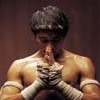 Our way of saying "thanks" in the Thai way. Here a nak muay Thai (kickboxer) offers respect and thanks for his teacher (wai khru) before a match. This is our local variation on the ubiquitous "hat tip" used in general blog culture.
A r c h i v e s

N e w s H e a d l i n e s
This Day in History
Website content
provided by The Free Dictionary
B l o g s

Tibet Blogs


Aqua's Dreamscapes
Beijing Wide Open
Chinese occupation of Tibet
kuala lumpur for a free tibet
Letters to the West
Life on the Tibetan Plateau
Meyul: in Exile
Precious Metal
RFA Unplugged
Shadow Tibet
The Interdependent
The Secret Tibet
The Soul of Tibet
TIBETSPACE
Tibet Talk
Tibet Will Be Free
Tibetan Studies Resources Blog
Tibetan Uprising Movement
Tibeto-logic
Voice for Tibet
Asia Blogs
2Bangkok 20 Alpha 4
American Expat in SE Asia
asiapundit
Beyond Wallacia
Burma Dialogue
Burma Digest
Burmese Bloggers without Borders
Burma-Myanmar Genocide 2007
China e-Lobby
Daai Tou Laam Diary
Far Outliers
Flaming Peacocks
Indonesia Matters
Jiwa Merdeka
Kaung Kin Ko
Macam-Macam
North Korea zone
Radio Free Nepal
Registan
Rule of Lords
Sarasonteh
Simon World
VietPundit
Iraq Blogs
HammorabiHealing Iraq
In the Red Zone
Iraq at a glance
Iraq Blog Count
IRAQ THE MODEL
Iraqi Bloggers Central
IraqPundit
The Messopotamian
Michael Yon : Online Magazine
Treasure of Baghdad
Middle East & the Stans
Across the Bay Afghan Warrior
Amarji - A Heretic's Blog
Big Pharaoh
Lebanese Political Journal
Martin Kramer's Sandbox
Muslims Against Sharia
Regime Change Iran
The Religious Policeman
SMCCDI
Syria Exposed
General Punditry
Belmont Club Best of the Web
Tim Blair
Blue Crab Boulevard
Chequer-Board
jules crittendon
Currency Lad
Democracy Project
Galley Slaves
Gateway Pundit
Victor Davis Hanson
Hot Air
INDC Journal
InstaPundit
Jihad Watch
Just One Minute
Oliver Kamm
Little Green Footballs
Llama Butchers
Mark in Mexico
Michelle Malkin
The Missal
neo-neocon
New Sisyphus
NormBlog
Oxblog
Power Line
protein wisdom
Publius Pundit
Doug Ross Journal
Sane Nation
Seeker Blog
SEIXON
Roger L. Simon
Solomonia
Stormbringer's Thunder
Don Surber
This ain't Hell
TigerHawk
Michael J. Totten
Winds of Change
ZenPundit
Eurotopia
Barce Pundit Davids Medienkritik
EuroPundits
Fjordman
Harry's Place
Iberian Notes
No Pasaran!
Zacht Ei
Can Con
Angry in the Great White North Autonomous Source
bob tarantino
Canada Free Press
Andrew Coyne
Damian Penny
Dust my Broom
Peaktalk
The Shotgun
small dead animals
Inkless Wells
Toons & Satire
Cox & Forkum Day By Day
iowahawk
Scrappleface
WuzzaDem
Media Watchers
The American Expat Backspin
Biased BBC
The Command Post
The Corner
The Daily Ablution
Diary of an anti-chomskyite
Hit & Run
HonestReporting
Oh, That Liberal Media
NewsBusters
PirateBallerina
Radio Blogger
Radio Equalizer
USS Neverdock
T i b e t
His Holiness the 14th Dalai Lama Tibetan Government-in-Exile
Tibet Information Network
Tibetan Committee for Human Rights and Democracy
International Campaign for Tibet
Canada-Tibet Committee
Phayul News
Australia Tibet Committee
Tibet Justice Center
Tibet Daily
Tibet Online Resource
Virtual Tibet Library
Dreams of Tibet
S o u r c e s
Memeorandum Snopes: Urban Legends
BBC | Monitoring
MEMRI
SITE Institute
A s i a P a c i f i c
Yahoo! News Asia The Jakarta Post
Paras Indonesia
Metro TV News Online
The Nation
Bangkok Post
Democratic Voice of Burma
Irrawaddy News
Mizzima News
BurmaNet News
Burma NewsLadder
Southeast Asia News
Sydney Morning Herald
The Australian


 Home
Home
Agam's Gecko

Monday, July 13, 2009
FURTHER VIOLENCE IN URUMQI
 'The future's so bright, I gotta wear shades.' Chinese soldiers march on a main street in Urumqi, July 13, 2009. Photo: Reuters / David Gray |
| V |
iolence flared again in Urumqi this afternoon, as Chinese soldiers gunned down at least two Uyghur men after they and a third man tried to attack the soldiers with knives. Two Uyghur men who witnessed the incident said the three had "hacked at the soldiers with big knives, and then were shot." Two Uyghurs were killed and the third was wounded. His condition is not known.
However in a later report, an Urumqi city official named Mr. Fan told Associated Press that the three attackers had been going after another Uyghur man when the paramilitary police shot them. The AP goes on to cite construction worker Zhang Ming, who said he also saw the men try to attack the soldiers. The security forces chased them, beat them and fired shots, he said.
Photos taken at the time show one policeman raising his rifle to strike a man. Beaten, the man in a blue shirt with blood on his right leg lay on the ground. Police formed a ring around him, pointing their guns up at surrounding buildings.And according to a still later dispatch from Reuters, the official Xinhua state mouthpiece has now reported the incident, and stays on-message with Mr. Fan's version. Uyghurs were attacking Uyghurs, and the People's Armed Police saved the day.
Xinhua also had more good news for China, revealing the long-awaited proof that the unrest in Uyghur country was organized by outsiders. Demonstrations against China's longstanding suppression of the Uyghurs have been occurring around the world, some of which have resulted in attacks against Chinese consulates and embassies.
"Supporters of the East Turkestan separatists started well-orchestrated and sometimes violent attacks on Chinese embassies and consulates in several countries soon after the riots occurred," Xinhua said, referring to name given to their desert homeland by some Uighurs.And there you go, what more proof could you need? Supportive demonstrations were organized in many countries, and were carried out by foreigners. Therefore the protesting students who marched in Urumqi's streets last Sunday afternoon were organized by foreigners too. It's so obvious! It couldn't possibly have anything to do with this:
"The attacks against China's diplomatic missions and the Urumqi riots seemed to be well-organized."
A Uighur security guard, who declined to give his name, said that while he did not support the violence, he understood people's frustration.A few days ago I mentioned that a Canadian journalist was among those being ejected from Kashgar, the Uyghur cultural capital in the western part of the territory. Mark MacKinnon is the Toronto Globe and Mail's Beijing bureau chief, and was in Kashgar to report on the demolishing of Kashgar's Old City by Chinese authorities. MacKinnon writes of his rushed eviction with fellow journalists here. His story on the destruction of Kashgar's Old City, for which (surprise!) the Chinese government has never applied for a well-deserved UNESCO world heritage listing, has now been published.
"Look around you -- 90 percent of all the businesses are owned by the Han," he said, standing in Urumqi's main bazaar.
"All I can do is get a job as a security guard," complained the university graduate. "The Han here can't even speak Uighur."
The Chinese government did the right thing by immediately allowing journalists into their 'New Dominion' to report on the conflict, but angry Han mobs probably didn't exactly fit into the desired narrative. An ABC news crew happened to see an attempted Uyghur lynching by a Chinese mob, which then promptly turned on the journalists.
Thirty Han Chinese men were beating a Uighur man, kicking him and punching him and hitting him with sticks. He was not fighting back but just trying to get away. Hundreds of Han Chinese were cheering the men on. Eventually, the police dragged the Uighur away and put him in a vehicle for his protection. Then, the mob turned on us. They blocked our cameras, not wanting the images of Han Chinese beating a Uighur to get out. I was pushed. Then the group surrounded us and started yelling. They pushed us back up a highway ramp where we were shooting. They yelled that western journalists were biased against the Han Chinese and that we should delete our footage. One man tried to grab our camera and then pulled out a baton and held it over his head as if he were going to hit us. We turned around and ran. The oddest part of the whole experience was that there were swarms of police and troops around and none of them were really trying to break up the fight.The Boston Globe has another fine Big Picture series on the ethnic violence in East Turkestan. It's good to see those big format images which make it easier to see people's faces. Some of it is disturbing, but the gallery offers a prior warning over the images which you may choose to skip.
Last night I watched Alim Seytoff, the Vice President of the Uyghur American Association, interviewed on C-SPAN's Washington Journal. The thirty minute interview, with video footage and phone-in callers can be viewed here.
I'll be in Indonesia this week, so I'm unlikely to post again until next weekend. Pro-Uyghur demonstrations have been held today in Surabaya and Jakarta, so I'm looking forward to learning what the Indonesian views are on the situation. (I'm also looking forward to ketoprak, sate, tempeh, nasi goreng, ikan bakar, etc. Heh.)
.
Friday, July 10, 2009
CHINA'S OTHER COLONY EXPLODES
 Keeping the peace in Sinkiang. Yes, those are crossbows. Photo: AFP |
| T |
he Chinese Empire's conquered colonies are restless. More than a year after the latest Tibetan uprising, protest still continues in Tibetan areas and China's responses are as intolerant and repressive as ever. Now a spark has ignited the dry tinder of rage in Uyghurstan, which the Communist empire calls the Xinjiang Uyghur Autonomous Region. A protest march in the regional capital Urumqi turned into a violent anti-Chinese riot, and protests have also been reported in Kashgar and several other towns.
The vast culturally Turkic area of central Asia was once divided up between two competing imperial powers — neither of which had anything much in common with the people of the region. West Turkestan was conquered by the Russian Empire in the mid 19th century, around the same period that the Qing Dynasty Empire (Manchus who had previously subsumed China and were not themselves Chinese) conquered East Turkestan. After the Russian Revolution the communists held on to the empire's central Asian colonies, converting them into Soviet Socialist Republics (Turkmen, Uzbek, Tajik and Kyrgyz SSR's). After the fall of Soviet communism, these all became independent countries.
But the Turkic Muslims in the eastern part of this vast region had a different fate. With the fall of the Qing Dynasty and the advent of the new Chinese Republic in 1912, the fringes of the empire began to fall away. The Tibetans evicted the Chinese and declared their independence, while eastern Turkestan fell under the control of various warlords and ethnic insurgencies. An East Turkestan Republic existed briefly in 1933-34 until a Russian-backed Chinese warlord retook control. A second East Turkestan Republic was declared (in what is now northern Xinjiang) in 1944. With the advance of the Chinese communist revolution in 1949 and the People's Liberation Army's advance into southern Sinkiang, Chinese Republican government officials fled to other countries or surrendered to the communists.
Uyghur resistance to the CCP continued, and the leaders of the East Turkestan Republic travelled to the Soviet Union in 1949 — where they were advised to cooperate with the Chinese communists. The five leaders boarded a plane in Kazakhstan, enroute to Beijing. The plane crashed, killing all on board. With all their experienced leaders now gone, the remaining figures in the East Turkestan government agreed to incorporate their republic into the "Xinjiang Uyghur Autonomous Region" of China. KGB files released after the collapse of Soviet communism revealed that the East Turkestan leaders had been killed on orders from Stalin — and in accordance with a deal the Soviet dictator had made with the new Chinese dictator, Mao Tse Tung.
This is admittedly a thumbnail sketch of Uyghurstan's recent history, but we can surely better appreciate the depth of resentment on view over the past five days if we have at least an outline of the initial relations between the Uyghurs and the Chinese communists. Unfortunately for the latter, you never have a second chance to make a first impression. By his own rhetoric, Mao was a great liberator of humanity. But by his practice, he was determined to recover every square inch of land ever (even marginally) colonized by long-past Chinese empires. Mao evidently inherited the imperialist gene from the earlier emperors, including the non-Chinese ones.
And Mao handed that gene down to his political descendants who have taken and run with it. At the time of the communists' victory in China's civil war, the Han Chinese comprised around 5-6% of the population in East Turkestan. Today, with its longstanding policy of transmigration into "minority" regions, the CCP has turned that around. The Han migrants now comprise around 40% of the entire "autonomous" region — three times the size of France. In the major commercial city of Urumqi (current population 2.4 million), the Han make up around 75% now.
The trouble on late Sunday afternoon began with a student protest march through Urumqi (a Dzungar name meaning "beautiful pasture"). The students were photographed in a non-violent procession, chanting and carrying Chinese flags, making their way toward People's Square. After that, the sequence of events is murky (I held off making a post on this until a clearer understanding of what happened on Sunday evening could be known — it still isn't). Foreign journalists were permitted to flood into the city the next day, but reliable accounts of the time between the protest march and the (at least) 156 deaths that night are hard to find.
Whatever happened, a non-violent protest march became — in the space of a few hours — an extremely violent anti-Chinese riot. Given the recent history of crowd control in Tibet, one might surmise that the smashing of shops and cars could have been triggered by a violent dispersal of the student protesters. Some hours later, Uyghur youths were hunting for Hans to beat and kill. Learning the exact sequence of events will be essential in understanding how this could happen, yet this short period (before journalists were present) is the murkiest of the past five days.
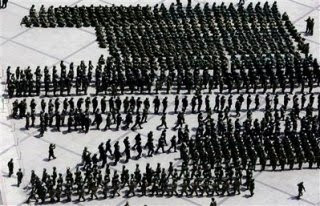 Troops assemble in People's Square, Urumqi, July 8, 2009. Photo: AP / Ng Han Guan |
One thing we do know about the spark for all this, is that it originated thousands of miles away. The students were marching to demand justice for some of their compatriots who had been lynched by a Han mob in Guangdong, a major industrial province in southern China. Those riots had been sparked by rumours initiated by a disgruntled Han factory employee, which claimed that Uyghur boys had raped some Han girls. At least one of the Uyghurs killed by the mob was reportedly a girl. After the riot and lynchings, it was found that the rape rumour had been false.
Rumours can be deadly, and perhaps the Chinese authorities are learning this. If China actually had a vibrant free press, the chances that one hateful person could start a baseless rumour and have it widely believed (with such deadly consequences) might be close to nil. The starting requirement is an unfettered press with journalists willing and able to investigate anything. Then it will still take time for various media outlets to establish themselves as trustworthy, or not. Until such time as citizens can trust the press, they will fall for rumours.
Of course the Guangdong riot was not covered by the Chinese media in any detail, since the authorities believe that hushing up uncomfortable events is the best course. This is a nutritious environment for growing bigger and better rumours. Authorities claim that only two Uyghurs were killed by the lynch mob, but with no trustworthy journalism to dig up the story, Uyghurs were also inclined to believe rumours. Following the Urumqi riots, I came across at least three separate accounts by Uyghurs claiming that the Guangdong mob had killed over 600 of their people, and that the bodies had been chopped up and dumped into garbage bins. That's some fine rumour fuel for what would follow.
The Chinese government must learn that an independent and trustworthy press is the only thing which can remedy this situation. But government officials continue to believe that they must control absolutely everything, especially information. This ridiculous attitude will cause many more deaths until the CCP learns their lesson.
The clearest accounts of the Guangdong incident come from a secretly-conducted interview with some of the hundreds of Uyghur factory workers now held under the protection of Chinese police. They are not allowed to leave the place where they are held, much less go home. One of the workers had a hidden cell phone, though they are not permitted to communicate to the outside. Radio Free Asia's Uyghur service was able to establish contact and spoke with three of them. Why aren't Chinese citizens permitted to know what happened that night, from the victims' perspective?
But even the deadly rumour from Guangdong can't be blamed for everything that happened in Urumqi. A "Strike Hard" campaign (Tibetans know all about those) was launched in Xinjiang in April. Many have been arrested over the past few months for taking part in "illegal religious activities" and regional Party leaders have been flying into their familiar Cultural Revolution-style tirades well before the Sunday night riot.
For whatever reason, the Chinese are not precisely following their Tibet pattern in responding to this incident. The day after the initial riot, foreign journalists were welcomed to travel to Urumqi and were afforded the only open internet connections in the city (at their hotel). But the authorities were unable to completely dispense with their impulse to control the message, and they set up guided "tours" for the press — apparently believing they had things well in hand. Suddenly, out of the lanes and alleys of an impoverished Uyghur neighbourhood, dozens of women and children appeared and wailed over the disappearance of their husbands, fathers and sons. Yet another staged media event (Labrang, Jokhang...) had gone awry.
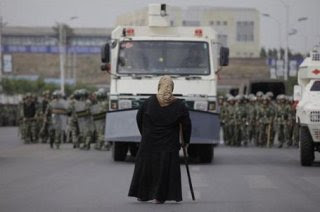 Tursun Gul walks with her crutch toward the might of the Chinese state, July 7, 2009. Photo: agencies |
The only video I've found of this event is in a report by Tania Branigan and Dan Chung in The Guardian. Watch for the soldiers and their equipment backing up at Tursun Gul's approach, in the opening seconds of that clip. Peter Foster of the Daily Telegraph tells her story. Without the accidental presence of foreign media, her act of courage would not have been known by the world.
But there was more to come. That same day, a new mob was taking over the streets. Angered by their own army's failure to protect them from the angry, marginalized and colonized minority, the Chinese citizenry organized vigilante gangs. Armed with crude weapons, they went hunting for minorities to kill.
It was too quiet. At two o'clock on another hot, dry afternoon they strolled up towards the People's Square. Some were in smart shirts and ties, others in jeans and trainers. In their hands were iron bars, knives, staves of wood, metal chains and nunchuks, golf clubs and meat cleavers, lengths of piping, shovels and axes.For the rest of the week, Chinese riot police and soldiers have played cat-and-mouse with the roving gangs of vengeance-seekers and the defiant remaining pockets of Uyghurs willing to challenge them. At some points the two groups were hurling rocks at each other over the heads of security forces. Heavy military deployments were made around Uyghur neighbourhoods in attempts to keep the Hans out — not always successful. But over those few days the vigilantes were kept on the move and unable to congregate in one place, earning the security forces an unaccustomed praise for their tactics from some foreign media members.
Little by little the numbers swelled, almost imperceptibly. Within half an hour there were hundreds of Han Chinese on the streets of Urumqi – then thousands. At first the talk was of self-defence. Then it turned to vengeance.
 A Chinese vigilante joins a mob attacking Uyghurs on July 7, 2009, showing off his multi-tasking capabilities in beating and documenting with one hand. Photo: AP / Ng Han Guan |
Some things, though, will never change under the CCP. Prominent Uyghur intellectuals disappear, presumably by police action (and even if he lives in far-off Beijing). The initial unexpected openness toward foreign media has an expiry date, as news agency reporters have now been ordered out (including a Canadian in Kashgar). Being that Friday is the most important Muslim prayer day, it's only sensible for the government to padlock the mosques and order everyone to pray at home, right? That was the decision this morning, but evidently that one won't fly right now. Urumqi's Uyghur population was able to get into at least some of their mosques today.
Also on the 'never change' list is the standard, number one response of the CCP — blame some outsider for your own deficiencies. With Tibet, of course, everything is always the Dalai Lama's fault. Party functionaries dream up conspiracies of plotting death and destruction, with His Holiness always at the centre. They have "plenty of evidence" but none is ever presented — only elaborate passages in official speeches lifted straight out of the Cultural Revolution, disseminated far and wide on the state controlled media mouthpieces. For the Uyghurs? That's easy: Rebiya Kadeer did it all. What would these vile repressive dictatorships do without a small but tough woman to blame for everything? (Is Hu taking lessons from Burma's Than Shwe?)
And let us not forget the clever strategy of vowing to execute as many as possible — that's always a smart move, and quite helpful at calming inflamed passions. It worked so well in Tibet, right? Oh wait... well, it couldn't hurt to try, eh?
A good source for keeping up with events in Uyghurstan is The New Dominion, a well-written and apparently well-connected website which has followed this episode from its first hours. The latest article is a letter from an anonymous foreign traveller who flew into Kashgar from Urumqi just before the riot. There is an account of the Kashgar protest, and the crackdown that followed it. Chinese CCPatriots will be pleased to know that it is depressing; if you want to experience Uyghur culture, you'd better hurry. The Motherland is burying it as quickly as possible.
Striking up a conversation with a police officer, the letter-writer asks him his thoughts on the situation. The officer replied that everything would be fine. "You know, in the next ten years, we’ll just send more Han here and that’ll just end the problem once and for all."
.
Tuesday, June 30, 2009
CLASHES, DETENTIONS, RELIGIOUS PROHIBITIONS CONTINUE IN TIBET
 Chinese security guards watch Tibetan pilgrims on the Barkhor, near Jokhang Temple. Photo: AP / Greg Baker |
| C |
hinese authorities imposed harsh restrictions on religious activities ahead of the Tibetan Saka Dawa observances which fell on the 15th day of the fourth Tibetan month, or June 7. The occasion marks the birth, enlightenment, and passing of Lord Buddha (a very important holy day for all Buddhists — in Thailand it is Wisakha Bucha Day, usually in May).
Sources said the concerned government offices in Lhasa had convened meetings of staff members and people under their jurisdictions and subsequently issued strict orders particularly to students and government officials not to visit temples during the festival.The stepped up security featured increased scrutiny of foreign arrivals and continuing investigations of Tibetan families with members outside the country, who are asked to provide their details and contact information to the authorities.
The normal life of people has been affected as the government have sent reinforcement of security forces and deployed a large number of intelligence officials across the city.
On the holy day itself, more than 200 Tibetans gathered at around 11:00 am in Lhasa’s Tromsikhang Market. They collected donations and proceeded to the Jokhang Temple to offer butter lamps and perform rituals. These observances were reportedly led mainly by Lhasa merchants from the Kham region. It was the same day that Paris Mayor Bertrand Delanoe was due to confer his city's "Citizen of Honor" award to His Holiness the Dalai Lama.
The crowd then moved through the open Barkhor street and assembled at the compound in front of the Potala Palace, the official residence of the Dalai Lamas of Tibet. Turning their back to a stone pillar placed by Chinese government and facing the Potala Palace the Tibetans wore ceremonial scarves around themselves and again shouted "Lha Gyalo" ["May the Deities Prevail" -ed.] in unison, sources explained.At around 4 pm a larger group gathered again at Tromsikhang Market. The police seemed alarmed with so many people gathering and demanded an explanation from the faithful pilgrims. The Tibetans replied that they were exercising their "freedom of religious belief." A number of Tibetans were arrested and all but six were later released. The Tibetans demanded release of the remaining six, and the Chinese authorities promised the angry crowd they would be released after their inquiries were complete. But the six — Pedo, Phurba, Dolkyab(Dokyab), Dorjee Tsering and Pema Demay from Kham Derge and Thuppa from Kham Nangchen — were not released. This was not a protest (despite the previous headline) but was in fact a religious observance.
A large number of Chinese security forces later stopped the group as they headed towards the monastery of Nechung (Tibet's State Oracle) and forced them to retreat.
"It was not a protest but a sangsol," or a special offering to Buddhist deities, one Tibetan man, a resident of Lhasa, said in an interview. The man said he had been detained for three days, from June 7-10.It is unclear exactly how many were originally arrested, or later released like the man quoted above. But some Chinese officials are not shy about denying confirmed facts.
"Many of us were detained, and it is not easy to give details on the phone," he said.
Municipal officials declined to comment.We continue to receive new details of March 14, 2008 — the night violence broke out in Lhasa following 5 days of violent suppression against peaceful processions of monks and nuns. They were beaten and they were arrested for five days straight, until some of the anti-government protesters themselves became violent and set fires in the city. After five days of seeing their monks and nuns dragged away from sit-down protests and trucked off to the detention cells, many people believed that some of these detainees had already been killed in custody.
But an official who answered the phone at the Lhasa Public Security Bureau said, "No one was detained. It was a religious event."
Sometime after the riot broke out, the official crackdown came. The very few western witnesses present were all astounded at how long the anti-riot response took to show up. PAP photo/video-graphers were out capturing the scenes for later productions (which later played on state TV with high repetition for months). Having a platoon of armoured riot police marching into these scenes could certainly have spoiled the movie. The Chinese tactic was to take loads of pictures and video first, then send in the anti-riot violence later. When it came, it came with a vengeance.
That night Phuntsok, a 21 year old driver, was at home with his wife and one year old child in eastern Lhasa. He wasn't protesting or chanting in the streets, much less setting fires. His vehicle for livelihood was his "three-wheeler," which I think would mean one of the canopied motorcycle-rickshaws used in Lhasa for passengers and goods. In other words Phuntsok was a poor man providing for his family. Chinese security forces arrested Phuntsok and took him away from his home that night.
"After the arrest, the PAPs beat him fiercely and then locked him — along with other innocent Tibetan detainees — in the storeroom of the Lhasa railway station. He was released after having detained there for 20 days."The Tibetan farmers' boycott campaign, prevalent mainly in Kardze Prefecture, has reportedly taken root in Jomda County, Chamdo. At the end of May, boycott supporters were arrested, beaten and shot by security forces, and arrests were made at Vara and Jobhu Monasteries. All but three of those arrested at the monasteries were later released, but Sonam Palmo (alias Sopal), Lobsang Palden and Yeshe Dorjee are being held as suspected boycott leaders.
On returning home, the source further said, he was given the bests of medical treatment but his condition did not improve much. "At the moment, his physical condition is very poor; he has to rely on walking sticks and cannot stand straight due to back injury that he sustained from severe beatings at the hands of the PAPs."
Tsering was hit by a bullet and Paga and Lhadher were taken away after being seriously beaten and injured by police with a baton. Samga was also beaten with the barrel of a gun. All these cases took place in Jomda County (Chamdo Prefecture, Tibet Autonomous Region TAR) in the end of May.It was also reported that Gyune Monastery was surrounded by armed security forces, and that eight residing retreat lamas were beaten during a night raid. Retreat lamas at Palchen Monastery were also beaten, the report said.
In Markham County, Chamdo, three Tibetans were sentenced for destroying equipment used to broadcast Chinese slurs and abuse against the Dalai Lama. The young men were arrested in October 2008 and sentenced on June 1. Ngawang Tenzin, 19, was sentenced to five years, Tenzin Rinchen, 17, was sentenced to two years, and Tenzin Norbu, 21, was sentenced to five years in prison.
A local source in Jomda County told Radio Free Asia that on June 13 authorities went to six Jomda monasteries to enforce the "patriotism re-education campaign". Three monks and an attendant from Nyedo Monastery were detained. Hundreds of Tibetans from nine nearby villages gathered at the detention centre demanding their release, and several hundred security officers dispersed them with tear gas and beatings.
"One Tibetan named Kalsang who was in the Chinese army and spoke Mandarin well tried to go toward the security forces and appeal to them to stop using poisonous gas. They beat him up," he said.The monks were later released. Many monks in Jomda are reported to be leaving their monasteries to avoid the government's indoctrination, which requires them to denounce the Dalai Lama. Monasteries have been told they must accept the indoctrination or be closed down. All non-cooperating monks are threatened with detention.
Protests against a mining company's water diversion project in Meldro Gongkar County (in the eastern portion of Lhasa municipality) have sparked a violent suppression by security forces. The large scale project channels water from the upper reaches of the Gyama Shingchu River to the mining site via pipes laid over agricultural lands (which were seized by the government without compensation to farmers). The mining of the upper Gyama region began in 1990, but the loss of their water was the last straw for local Tibetans. Gyama Shen is the birthplace of the great Tibetan king Songtsen Gampo (617-650 AD).
After authorities refused to hear the residents' appeals, clashes broke out between Chinese miners and angry Tibetans on June 20, followed by a police crackdown which left three Tibetans wounded. One seriously injured person was denied admission to a county hospital and was transported to Lhasa. It isn't known whether that person survived. After the incident, representatives from every family in the affected farming villages protested at the local government office.
Water for irrigation has been cut off in Gyama Township by the mine project, and last year toxic mining wastes were dumped into the river causing many livestock and wild animal deaths. The fifteen villages in the valley depend on the river for their water, but since the destruction of its source by the diversion project, the river has dried up as have many of the area's natural springs. Pastures are parched and drinking water is toxic.
The government of the T-"A"-R sent a group of senior officials and security forces to the area on June 21 for a meeting with the residents. After the meeting, at which the locals demanded an end to the mining activity, security forces left the area along with a large number of the mine workers. The demonstration at the township government office continued until the next day, with people seen laying down and preventing passage to the mine site.
A previous mining dispute is reported to have been settled in Markham County, Chamdo. Radio Free Asia reports that the sacred Ser Ngul Lo site has been saved from becoming an open-pit mine, after four months of local protest.
Both sides agreed June 8 that the mine—which had operated in Markham [in Chinese, Mangkang] county, in the Tibet Autonomous Region’s (TAR) Chamdo prefecture—would cease operations, sources said.There is still no word on the outcome of the strong local resistance in Tawu County, Kardze to the construction of a major hydro-electric project which will displace tens of thousands from their ancestral lands. Protests there have been suppressed with firearms, leaving six women seriously wounded last month.
"It was agreed in writing that there will be no mining in the area," said a local Tibetan man, speaking on condition of anonymity.
"All the Chinese security forces deployed in the area will be withdrawn. The Tibetans who are blocking the road will also return to their respective areas."
"Chinese authorities will build concrete barriers to block the poisonous residue of earlier mining in the area so that this will not filter down into the drinking water," he added.
A reminder of the dangers Tibetans face if they dare to provide information to the outside world was recently provided by the Dui Hua Foundation, a human rights advocacy organisation. Gonpo Tserang, a 32 year old tour expedition guide in the Dechen Tibetan "Autonomous" Prefecture (Ch: Yunnan province), was sentenced to three years imprisonment for "inciting separatism" by sending email and text messages during the unrest last year. At the trial in September 2008, Gonpo Tserang was found to have "used the internet to deliberately fabricate rumours, distort the true situation and incite separatism" in his communications with six named people outside Tibet. An appeal was rejected by a higher court in January.
The Foundation notes that this is the first known case of a Tibetan in Yunnan to be convicted on state security grounds since the latest Tibetan uprising began in March 2008. The content of his messages is never specified in either the original indictment or the appeal rejection (both are translated here). Gonpo Tserang was not represented by counsel. Phayul News adds that he has been well respected in his professional career, having trekked with "foreign celebrities" and participating in high profile mountain rescue efforts. This case demonstrates the extent to which Chinese surveillance is able to monitor Tibetans' communications with the outside world, for which the authorities have zero tolerance.
 Satellite dishes confiscated and destroyed by authorities in Labrang, Amdo, May 20, 2009. Photo: Invisible Tibet (Woeser) |
A Gannan prefecture document obtained by RFA, citing State Council document #129, describes what it calls "unprecedented efforts to collect satellite dishes" to restrict access to long-distance broadcasts in Gansu province, a site of repeated Tibetan protests against Chinese rule during the past year.The destroyed satellite receiving equipment is being replaced with cable which carries only government-produced programming.
Anyone failing to comply with government directives to remove the dishes would be "dealt with in accordance with law," the memo said.
Chinese state-media mouthpiece Xinhua made a rare admission early this month, attributing the recent suicide of a Tibetan Buddhist monk to "stress." Sheldrup, a 43 year old monk in Rebkong County (Ch: Qinghai province) had been detained following protests at his monastery on April 17, 2008, and was severely tortured in custody (a detail Xinhua inexplicably missed). He was later released.
Sheldrup's name then appeared on a PSB wanted poster and he left his monastery to go into hiding, during which time his health deteriorated badly. Earlier this year he returned to his monastery, and soon afterwards he hanged himself according to Xinhua, which specified the sources of his "stress" to "illness and deaths in his family." The monk had spent around 10 years studying at Gaden Monastery in India, returning to Tibet in 2006. A rash of suicides by monks and nuns in Tibet has been described in a report submitted to the United Nations Special Rapporteur on the Freedom of Religion.
Suicide is a grave sin in Buddhism, and certainly any monks or nuns who choose death by their own hand have been pushed beyond the limits of endurance. Yet another example of the extreme measures taken against them (especially if they have spent time in India as Sheldrup had) was given by a Tibetan woman who recently reached freedom in exile. Tenzin had previously attended a Tibetan school in India for three years, and then became a nun and studied at a monastery in Dharamsala. In 2005 her father became ill, and her family asked her to return to Tibet to see him. Authorities somehow learned that she had been in India, and they made her three-month home visit intolerable. She prepared to escape again, through the border area of Burang. Her group was intercepted by Chinese border police and taken to an army barracks in that region.
Tenzin was taken into a dark room and asked by a soldier whether she was a nun. She replied that she was. She was then beaten with batons and belts until she felt numb and went unconscious. After five days of interrogation and beatings, the group was taken to a detention centre. There, Tenzin was raped by her jailers.
"For many days they locked me up in a solitary confinement cell which was big enough for only one person. Both my arms and feet were handcuffed to a wooden bed. Then one night the light was switched off, and two prison guards came into the cell and told me that I had to take some medicine. I said I was not going to take any medicine. I thought that time that they were going to kill me by giving me that medicine. So I struggled to shake my head while they were forcing to put the medicine to my mouth but they forced me to swallow it down by pouring water into my mouth and blocking my nose by pressing it. [The type of medicine or drug given to Tenzin is not known.] After that, two guards went out and chatting with each other outside the cell. Then moments later they came in, and I sensed something bad was going to happen, I screamed as loud as I could in the hope that someone would come to stop them. But all was in vain, one of the guards covered my head with his coat and was trying to stop me from screaming while the other raped me. Later I fell unconscious. I dont know if that was because of the medicine they gave me or out of fear. I could not feel anything, especially the lower part of my body."Tenzin was sent to a police department in Ngari (western T-"A"-R) and then on to a "re-education through labour" camp for a three year term of punishment. She was initially kept in solitary confinement. Continuing torture, poor living conditions and lack of sufficient food cause her health to deteriorate, and she was released after about one year because the authorities believed she would soon die. Her family spent nearly all their savings on her medical treatment, and after some months at various hospitals she returned home. Tenzin remained under heavy surveillance and her movements were curtailed. After the outbreak of protests in March 2008, officials visited her home every day pressing her to denounce the Dalai Lama. She re-entered hospital for several months and then resolved to try escaping again. She reached India earlier this year.
 Tsundue Gyatso, a Labrang monk, has been arrested for the fourth time. Photo: TCHRD |
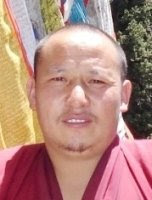 Sonam Gyatso, a Labrang monk, has been arrested for the fourth time. Photo: TCHRD |
 The fate of Ngagchung, a monk at Larung Gar Buddhist Institute, remains unknown more than one year after his detention. Photo: TCHRD |
The Chinese government conducted another farcical show tour for selected foreign media last week. For the occasion, the large numbers of paramilitary police which patrol the Tibetan capital changed out of their usual military-style uniforms and into fashionably non-threatening black and yellow track suits. The reporters were taken on rushed visits to a primary school, a monastery, and one Tibetan family's home. The marching track suit-clad patrols of crew-cut young men told the journalists that they were "students" — and some even carried school books to prove it — but local residents confirmed that they were the same PAP squads which have become a dominating and constant presence in Lhasa's streets since last spring.
The reporters were taken to the Jokhang Temple on their official tour, and found it nearly deserted. They were permitted only to meet the "chief monk" who gave them the Chinese government's version of the situation. The next day, reporters saw around 100 monks being returned to the Jokhang in buses.
One monk was able to arrange a secret meeting with an Irish radio reporter. He outlined the political indoctrination classes he and his fellow monks are forced to attend, describing them as "painful." They are forced to criticize the Dalai Lama in these classes, he said, and more than half the monks at his monastery had left because "they found the pressure too much."
The landmark report on the Tibetan situation by the Beijing-based academic think-tank Gongmeng (Open Constitution Initiative), which conducted a survey of Tibetan areas last year, has now been translated into English by the International Campaign for Tibet. It is the first Chinese study to find that PRC policy failings are primarily responsible for the high level of discontent in Tibet.
But the Chinese public is as unlikely to see mention of this report as it is to find any coverage of the Iranian freedom movement in any Chinese media.
.
Friday, May 29, 2009
TIBET'S NATURAL WEALTH COVETED BY NEIGHBOUR; RIVERS OF MONEY CAN'T BUY LOVE
 Tsewang Dhondup yesterday showed his wounds to reporters in India. The injuries are the result of Chinese troops opening fire on demonstrators in Kardze County on March 18, 2008. Photo: Abhishek Madhukar / Reuters |
| T |
ibet's natural resources, and China's desire to have them, are becoming the latest flash-point of contention between the Tibetans and the colonial authorities. In early 2008 the government began coercing residents in Tawu County, Kardze Tibetan "Autonomous" Prefecture (Ch: Sichuan province) to sign documents approving of a major new hydro-electric project located between Tawu and Nyagchu counties. The dam will displace tens of thousands from their traditional ancestral lands, and is being strongly opposed by the local people.
At the town of Wara Mato, the Chinese government recently convened a meeting with residents to persuade them to relocate, and erected a stone pillar to drive the point home. An old woman named Lhamo, believed to be over 70 years of age, led the angry residents in refusing to move and declaring that they are the owners of the land. The residents destroyed the pillar. On May 5 a large number of armed police were dispatched into the affected area, where they destroyed a number of family homes.
Last Sunday morning, May 24, local Chinese authorities ordered residents to assemble at Tawu County headquarters for a public announcement. There the Tibetans were again informed of their forced resettlement. The meeting immediately broke up and turned into a major protest against the plan. The residents shouted at the local authorities, declaring that, "This place has been our ancestral dwelling place for countless generations and therefore we don’t want to leave our homes. We are not going to move away to any other places come what may."
Moments later, officers of the Public "Security" Bureau (PSB) and the "People's" Armed Police (PAP) fired tear gas and violently suppressed the protesters, reportedly opening fire upon the unarmed residents and leaving six women seriously wounded, identified as Tsering Lhamo, Rigzin Lhamo, Dolma, Kelsang, Dolkar and Khaying. These wounded, which included a 70 year old woman, were immediately taken away after the shooting and their conditions are not known.
Meanwhile in Markham County, Chamdo T-"A"-P (in the Tibetan "Autonomous" Region) local residents have been struggling to save their sacred mountain, Ser Ngul Lo, from becoming an open-pit gold mine at the hands (and equipment) of a Chinese mining company. The mountain has historically been a site where Tibetans worship and conduct religious rituals, and their resistance to the mine has continued for months. Hundreds of local residents have been blocking the road to the mine site, and hundreds of soldiers have been deployed to the area.
"The Tibetan protesters are worried," said one local man, who said he was one of eight organizers of the protest.Another local resident told Radio Free Asia that more than 300 soldiers are involved, while another said that telephone lines and cell-phone networks in the area are blocked.
"The police, the soldiers, and the miners are threatening to move ahead with the mine...They have said they will force their way through and go to the site."
"We can’t reach any of the protesters. Today another four vehicles with roughly 30 to 40 soldiers in them went to the protest site. But the Tibetans all put religious books on their heads and are vowing to resist even if it means sacrificing their lives," he said.Neither the mining company, Zhongkai Co., nor the Markham Public "Security" Bureau would comment on the situation. The vice chairman of the T-"A"-R Communist Party, Pema Thinley was sent early last month to negotiate with the local population, but they continued the blockade and he was escorted back to Lhasa. On May 16 around 500 Tibetans blocked a contingent of security forces on the road leading to the mine site, a resident told RFA.
"The Tibetans slept on the road day and night and the Chinese group stayed in a school nearby. They were trying to convince us to stop protesting," he said, adding: "The Tibetans declared that they are ready to die to protect the sacred hill."A local official from the Markham County Business Bureau later claimed the stand-off was close to a resolution, involving promises of no environmental damage and a "certain amount of compensation." However on May 26, several hundred Tibetan businessmen gathered in Lhasa to complain of the harassment and intimidation of the Markham demonstrators.
A local source in Markham County told RFA that the authorities have told the Tibetans that they have no hope of stopping the mine.
"On May 26, the governor of Markham county and Dorjee Nak Nak, head of the land protection division of Markham county, came to the area and appealed to the Tibetans. They tried to convince the Tibetans that the mining plan could not be stopped," the Markham county resident said.Following that meeting, which sounds about as successful as the average patriotism re-education / denounce the Dalai Lama for the Motherland meeting, the PAP began to threaten those maintaining the roadblock, around 65 km from the Markham County seat.
"The Tibetans booed them and they were forced to leave the area immediately," he said.
"Police repeatedly threatened to run over those Tibetans lying down and blocking the road to the mining site in Takra village, Tsangshul subdistrict…When the Tibetans would not clear the road and begged them not to exploit their sacred hill, the security forces dared not run them over," he said.The five recent escapees from Tibet, who recently arrived in India after dodging security forces around Labrang since April last year, had something to add about the mining issue. During their year as fugitives in the Amdo hills, they witnessed the explorations of Chinese search groups looking for prospective mining sites. These groups consist of around 15 people, and are sent into various townships every month to explore for new sites. Further testimony of the five monks, on the crackdown at Labrang and their dangerous year on the run, has been published here.
Two more Tibetan men involved in last year's protests, this time from Kardze, arrived recently to India en route to Dharamsala. Monk Tsering Jigme, 24, and layman Maday Gonpo, 41, escaped separately after participating in protests last March 18 and avoiding capture for over a year. Maday Gonpo was an organizer of the demonstration in Kardze town.
"We began our protest at Tachu Do in the center of Kardze town. After we had crossed two bridges, five police vehicles and two army vehicles arrived and attacked us. There were about 1,000 protesters, including about 15 who were leaders."The nomads looked after him, giving him food and letting him use their horses to keep away from those hunting him. They even surveyed the situation in the town to determine when it was safe for him to return, but the crackdown there was ongoing and he never returned. Tsering Jigme resided at the Tsi Sung Monastery and also took part in the same protest, but he declined to speak to a reporter.
"Of these, five were detained, while I and others managed to escape. Two of my friends were wounded by gunfire," Gonpo said.
"There was no way I could go home, so I wandered from place to place, mainly in the hills of Nyagrong and other areas where nomads live. At times, I had nothing to eat for two to three days. I also fell ill with a fever," he said.
On May 7, 2008, local police issued a public notice calling for the arrest of the two men, as well as 34 others from Kardze, Drango and Serthar counties.
"A reward of 10,000 to 20,000 yuan was offered for anyone who could catch us," Gonpo said.Four more Tibetans who also participated in the March 18 Kardze County protest have just arrived in India. Tsering Gyurmey, Gonpo, Tsewang Dhundup and Lobsang Thubten held a news conference in New Delhi yesterday. Tsewang Dhondup had gone to the aid of a monk, 20 year old Kunga, who was hit by a bullet on the fateful day (Kunga did not survive) when he himself was shot twice. Lacking medical care his wounds worsened (see top photo), causing him to endure extreme suffering in the year since. Tsewang said he believes around 20 people died that day.
"We heard that this was announced on television and that authorities also promised the award would be increased this year," he added.
Two other men who participated in the same protest, and who also survived in the hills for more than a year avoiding arrest by the Chinese police, were not as fortunate as these escapees. Tenpa, 30, and his brother Jamdo, 25, were farmers in Zakhog Township, Kardze County before the March 18 protest was crushed with deadly violence. The brothers were arrested early this month in Jyekundo T-"A"-P (Ch: Qinghai province). Their condition and place of detention is not known.
But the type of treatment dished out to those caught by the Chinese authorities for protesting, like Tenpa and Jamdo, can be assumed from past practices. Beatings and other forms of real torture are virtually guaranteed, and if the prisoner happens to get too close to death for the authorities' comfort, he or she is sometimes allowed to die outside of detention. Too many such cases have been documented over the past year, and over the years of occupation. A study of two particular murder cases provides extensive details of two completely innocent people who were detained last year, suffered extreme physical abuse, and died as a result — one in custody and the other outside of custody.
The case of Tendar, a 28 year old Lhasa office worker, came to light in a smuggled video a few months ago (and I note that YouTube is pulling down its versions of the footage released by the exile government). On his way to work on March 14, 2008, Tendar saw a monk being beaten by police. He tried to intervene, asking the police for mercy. He was shot (the wound was said to be not life-threatening) and arrested. The physical mutilation he then suffered in Chinese custody was life-threatening (the video is still available here). Please read the above linked report for the full story. After three weeks in hospital, nothing more could be done for him and he finally died at home.
Paltsal Kyab was a 45 year old man who lived in Ngaba Prefecture, and was arrested following a protest on March 17, 2008. Around 100 people peacefully demonstrated in the main street of Charo town that day, but there was some talk among the youths about burning a building. Paltsal Kyab told them not to take such actions, saying (according to his brother), "We Tibetans must follow His Holiness the Dalai Lama's non-violent path. Our only weapon is our truth. The building belongs to the government, but several Tibetan and Chinese families are living in there." Other witnesses also confirmed that Paltsal Kyab had persuaded the protesters not to become violent.
Despite his actual stand on truth and non-violence, Paltsal Kyab's name was put on the government's wanted list. He talked to friends about going to the police to clear his name, but the stories of ongoing detainee beatings worried him. So he left town to stay with a relative. A few weeks later, his home was raided by police and his 14 year old son was detained and beaten up in the police station. The father heard about the incident and, understandably worried for his wife and five children, returned home and voluntarily surrendered himself (Chinese authorities had promised leniency for those who surrendered) in mid-April.
His family had no idea of his whereabouts or condition until officials told them on May 26 that he was dead. Dead of "natural causes" — which included black and blue from head to toe, covered in blisters and burns. Police attempted to bribe his family to keep quiet, prohibited photographs of the body, and barred them from taking his remains to Kirti Monastery for religious services. He was given a sky burial as police officers watched, the preparation of which revealed further serious damage to his internal organs. Please read the above linked report for the full story.
That is what can lay behind those innocuous words, "The detainee's whereabouts and condition are not known."
Tsultrim Gyatso, a 37 year old monk at Labrang Monastery was sentenced to life in prison on May 21 by the Intermediate People's Court in Kanlho Prefecture (Ch: Gansu province), having been found guilty of "endangering state security." He had participated in a peaceful protest on March 15, 2008 in Sangchu County and left the area to avoid arrest. Public "Security" Bureau officials tracked him down and arrested him on May 22, 2008.
In the same trial, 34 year old Labrang monk Thabkhay Gyatso was sentenced to 15 years for "endangering state security" in the same peaceful protest. Both monks have been denied visits from family members for more than a year (since their arrests), and their families were not informed of the trial.
 The abbot of Dhen Choekor Monastery in Chamdo, Tenzin Gyaltsen, sentenced to 15 years in prison. Photo: TCHRD |
A number of Tibetans have recently been sentenced to death in Chinese courts, and even their whereabouts remain unknown to their families. By Chinese law, capital punishment sentences must be referred to the Supreme Court within six weeks of pronouncement. That period expired on May 21 for four Tibetans facing execution (one is granted a two year reprieve), yet their families still have no idea where they are. Chinese state media contended that these were "open trials" yet the families were not informed of the proceedings and the defendants had no rights to proper legal representation. Two more death sentences were handed down on April 21. By the way, the previous Dalai Lama banned capital punishment in Tibet in 1913, as well as all forms of "cruel and unusual punishments."
 Loyak, 25, from Lhasa area, sentenced to death. Photo: Capture from Chinese tv |
Senior Communist Party figures, such as Feng Lanrui, a former State Council strategist, are part of the think tank's circle of advisors.Beijing's efforts to buy Tibetans' loyalty with "rivers of money" since 1989 have been spectacularly counter-productive, the report says. Private sector jobs go to Han Chinese who migrate from other provinces hoping to get rich and glorious, as Deng Xiao Ping used to say. A founder of the Communist Party in Tibet, Phun Tshogs Dbang Rjyal, is quoted elaborating on the reasons corrupt officials consistently seize upon outside scapegoats for their failures.
It also highlighted the tensions caused by a drive to industrialise the region and move Tibetans from farms into the cities.
"And they will try hard to apportion responsibility on 'overseas hostile forces' because this is the way to consolidate their interests and status and eventually bring them more power and resources."This is a rare occasion, to have a credible study by scholars within China looking into the hidden side of ideologically self-serving propaganda, and the destructive effects when corrupt elites rely on it to everyone else's detriment. The Party will ignore it, like the Zhao Zhiyang tapes, but at least the truth is out there.
.
Wednesday, May 27, 2009
DEADLY MOLECULES
 Following three days of large scale demonstrations outside the Supreme Court, civil rights protesters gathered near the railway station in Beijing on Monday, May 25, 2009, to greet Speaker Pelosi with their high expectations. The banner reads, "Welcome Pelosi. Pay close attention to China's human rights. SOS." Photo: Boxun News |
| I |
t seems like I may have to reassess the scientific evidence that those dastardly, yet deceptively tiny carbon dioxide molecules can kill. Just the other day, a gorebal warmening activist tried to convince me with the ultra-scientific approach, saying, "If you don't believe that CO2 is deadly, just put a plastic bag over your head. You're breathing it!"
But after writing off that experimental proof as something a fourth-grader could rebut (it's not the presence of CO2 but the absence of oxygen, eh?), today I'm having second thoughts through a completely different observable phenomenon. Carbon dioxide molecules are the enemies of human rights — or perhaps more accurately, the irrational fear of carbon dioxide molecules is killing human rights defenders.
The great one-time critic of China's massive human rights violations, Speaker Nancy Pelosi, is in China at the moment. I praised her highly when she led a congressional delegation to Dharamsala during the peak of the Tibet uprising last year, and I put the raw video of it on YouTube. She has supported good pro-Tibet legislation in the US, and eighteen years ago she unfurled a pro-human rights banner in Tienanmen Square. But when gorebal warmening is on the table, human rights are off it, apparently. Which will directly lead to more of these deaths.
Prior to her almost-top-secret departure, Nancy was asked point-blank about the issue. The reporter asks, "Will you make a case for human rights while you're there? Coming up to the 20th anniversary of Tienanmen Square..." She first shows her annoyance that the Chinese government disclosed the trip, and that the US embassy had confirmed it. The Speaker's travel plans are supposed to be top-secret and highly classified, you see. No one is supposed to mention it — why, it's almost as dangerous as when former President Bush needed to travel unannounced into Baghdad!
Then she dances all around the question without even saying the words "human" or "rights" in a rambling non-answer:
(Sorry for the video player here, C-SPAN now uses streaming flash format. Finicky, but I couldn't find this bit on YouTube, what with everyone focusing on a completely different non-answer about her accusation that the intelligence services regularly lie to her.)
But for those "leaks" from the Chinese and US governments, she could have made it all the way to China in complete secrecy without nagging questions. As President and First Lady Bush did when travelling to China, she made a stopover in Anchorage. The Bushes also gave no interviews, but said "take all the photos you want." Photos of the Speaker were however strictly prohibited, as were any acknowledgements of her presence.
By contrast, everyone denied any knowledge of a Pelosi visit, even when security flanked the center and asked each other if "the speaker" had arrived yet, according to one earwig who was there.Why all the secrecy? Chinese civil rights proponents knew she was coming, and gathered in Beijing on Monday to welcome her at the railway station from Shanghai.
The peaceful protesters were roughed up by police and non-uniformed thugs, and around a dozen were arrested, including a foreign reporter. Slogans such as "Bring down corrupt officials," "Restore human rights," and "Long live democracy," were shouted.
Also joining in the protest was Ms. Zhao Chunhong, a long-term protester from Hebei Province, who says she has desperately appealed for her rights for over two-years. With the help of another protester, Ms. Li Suzhen, Zhao unfurled a banner that says: "Welcome Pelosi: SOS – please pay attention to China’s human rights" and shouted slogans.Large scale civil rights demonstrations had been going on outside the Supreme Court in Beijing over the previous three days (wai Gateway Pundit, who has more video).
The Chinese police tried to take the banner from Zhao. Zhao, who is eight months pregnant, was dragged to the ground, and her legs were injured and her arms twisted. Several elderly women were knocked to the ground also.
The Chinese police manhandled the protesters and injured many people. Elderly people in their 70’s were pushed to the ground by hired thugs.
According to Mr. Zhou Guangfu from Chongqing, there were more than 2,000 protesters.
And in a remarkable development, Scott Ott (editor-in-chief of the world-renowned satirical news agency ScrappleFace News Network [News Fairly Unbalanced. We Report. You Decipher.] acquired a top-secret draft of Speaker Pelosi's ultra-secret planned speech to the American Chamber of Commerce in Beijing. Some notable passages, "leaked" via the Washington Examiner:
"History will judge how the Peoples' Republic of China, and the United States of America confronted the greatest threat the earth has ever seen. I speak of global climate change, of course, and nothing more."Didja see that? I bolded it so y'all couldn't miss it. The Speaker can almost bring herself to say it! Now we just need to work on changing that vowel in the middle...
"There is still time to reverse this deadly trend. China, free to bet on a better future, can cut its filthy byproducts by dismantling the obsolete machine, and unleashing the clean energy of her as-yet-untapped resources -- the power of sunlight and the wild sweeping wind of change. I speak of alternative energy, of course, and nothing more."
(I repeat: that was satire.)
.
Wednesday, May 13, 2009
LABRANG TRUTH-TELLERS ESCAPE TO FREEDOM
 (Left to Right) Gedhun Gyatso, Lobsang Gyatso, Kelsang Jinpa, Jamyang Jinpa, Jigme Gyatso Photo: Tibet Post International |
| F |
ive Buddhist monks from the Labrang Tashi Kyil Monastery in Tibet's eastern Amdo province (Ch: Gansu) have reached safety in India, after more than a year spent dodging Chinese security forces in their occupied country. The men were on the run from Chinese authorities due to having engaged in free speech activities — a peaceful protest demonstration in Labrang town on March 14, 2008, and an unapproved press briefing at their monastery on April 9, 2008.
Gedhun Gyatso and Kelsang Jinpa, both aged 39, reportedly helped to organise a procession through downtown Labrang (Ch: Xiahe), four days after the 49th anniversary of the Tibetan National Uprising of 1959. In their national capital city Lhasa, many similar processions had been violently suppressed beginning on March 10, with non-violent chanting monks beaten up and detained by Chinese security forces. After five days of this violent response to non-violent demonstrators, a riot broke out in Lhasa late on March 14 in which both Chinese and Tibetans were killed.
Lobsang Gyatso, 24, Jamyang Jinpa, 24, and Jigme Gyatso, 23, participated in an appeal for the world's help during a Chinese stage-managed "international media tour" which visited their monastery on April 9, 2008. Several dozen of Labrang's monks suddenly appeared before the startled journalists and camera crews, bearing their banned Tibetan national flag and banners reading such things as, "We do not have freedom of speech". The unapproved press briefing was extremely embarrassing to the Chinese colonial authorities, who had hoped to prove that all was perfectly well in Tibet by having a compliant foreign press listen to scripted recitations of the PRC talking points. These three men were among the courageous ones who foiled that plan.
Let's have a little reminder of what that looked like. Remember, these men knew they were risking everything when they did this — potentially including their lives. That is the emotion one can hear in the voices. Chinese officials and security are watching it all take place, unable to intervene because the cameras are rolling. From the testimony of Lama Jigme (see previous article) we know that severe retribution was dealt to some of these men after the cameras were gone.
This escape was first reported by Radio Free Asia, which interviewed them on arrival in New Delhi. Those who had participated in these two events learned that they were targets for arrest, and an unknown number took to the mountains around Labrang and tried to avoid capture in small groups.
"We lived like animals, moving from place to place. But this was better than prison," [Gedhun] Gyatso, one of the protest organizers, said in an interview.Gedhun, Kelsang and another companion were surrounded by Chinese police in the mountains after two months of hiding. The two of them escaped but the other companion was captured and remains in prison.
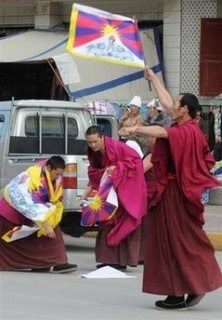 Buddhist monks prepare banners and national flags as they ready for a procession through Labrang town, March 14, 2008. Photo: Mark Ralston / AFP |
"We called for freedom for Tibet and for the release of Tibetan political prisoners, including the Panchen Lama," [Jamyang] Jinpa said.Jamyang added that a lama had advised them to escape after Chinese troops surrounded the monastery when the journalists were gone. They dressed themselves in laymen's clothing and headed for the hills.
The monks reached Dharamsala on Sunday, to a heroes' welcome as they stepped off the early morning bus from Delhi. A press conference was held on Monday — a real press conference this time, without fear of Communist Party reprisal. Phayul reports:
"We couldn’t remain silent when peaceful Tibetan protests in Lhasa and other places were being brutally crushed down, and our fellow Tibetans were being killed for holding peaceful demonstrations," [Gedhun] Gyatso added.Jamyang Jinpa directly addressed the Chinese government's claim that Tibetans are happy and content under their rule, and that the protests which swept Tibetan regions last year (and continue in smaller scale) were the work of foreign-based "splittist instigators".
"What has been happening in Tibet from last year is a spontaneous outcome of deep rooted resentment Tibetan people have had against the Chinese government. No one was there to tell us to protest. Situation alone compelled us to come out on the street," Jinpa said.The men say their newfound freedom has not given them a sense of relief. They did what they did on behalf of their people, and their people remain under the Communist Party's boot.
"Thinking of Tibet makes us feel worried. Our greatest concern is for those who are still suffering in Tibet. Many Tibetans are undergoing torture in Chinese custody," Gyatso said.The Tibet Post also covered the no fear press conference (although it seems to get both incident dates incorrect), and offers additional statements by the new arrivals. Jamyang Jinpa described the Chinese policy in his country this way:
"Population transfer has made us a minority in our own country, we have been colonized by the Chinese, and Tibetans are forced to acknowledge a fake Panchen Lama. [T]here is no religious freedom in Tibet, we are forced to denounce His Holiness the Dalai Lama who is at the core of our heart, from who we seek refuge and salvation."
 The monks' procession through Labrang town, March 14, 2008. Photo: Mark Ralston / AFP |
The coverage of this great escape has so far been seen on ... the Tibetan exile media only. Up to posting time, this has not been reported on any mainstream international news service, many of whom were present when these monks and others risked everything simply to talk to them last year. This is also very curious, since there are plenty of extra international journalists in India now for the election, and most of those are surely in New Delhi (where these notable escapees first arrived five days ago).
The farming boycott in eastern Tibet is continuing through the last part of the planting season, according to Geshe Monlam Tharchin, a member of the Tibetan parliament in exile. In a report gathered from local sources in the Derge region of Kardze Prefecture, Chinese are reportedly taking land from Tibetans who refuse to cultivate in some areas, and buying up Tibetan farms in other areas for use as a military base, in an increased military presence in the region.
It's now too late in the season for planting wheat, but authorities continue to pressure Tibetans to plant potatoes, peas, and similar crops. Local authorities reportedly issued announcements that, "If you will not to plant the farms, our military will use those farms for our purpose." Many people, mainly men, are escaping their towns and villages on the pretext of gathering medicinal plants. Pressures applied to the population through officially-organized public meetings are meeting resistance, and when asked why they won't plant their farms, the responses are along the lines of, "We Tibetans in the areas are united in our efforts to show our strong solidarity to our brothers and sisters those who lost their lives and those who have faced and are facing brutality, suffering and genocide under the Chinese rule."
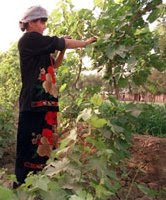 A woman works in her family's vineyard in Turfan, May 9, 1997. Photo: AFP |
In 1983 the government leased wasteland in northern Xinjiang Uyghur "Autonomous" Region to local peasants, on the condition that they grow fruit orchards. By now the orchards are well established and productive, and the government intends to break the 50 year lease, expropriate the land paying a fraction of its value, and sell it to Chinese businessmen.
Township government chief Abdusamet said the orchards would be better managed if they were bought back.So the 25 years of work which created the orchards and made them profitable, is translated as, "unable to manage their orchards well," and the government will "manage it better." (This sounds familiar.) It will do that by tearing up the contracts, buying the land at 20% of its value, and selling it to Chinese businesses. The real reason is almost an afterthought — local government needs the money.
"The farmers are unable to manage their orchards well," he said. "That is why the township government will take it back — we will manage it better."
"We will auction the orchards to Chinese businessmen from the rest of China," Abdusamet said.
"The Uyghur farmers are unable to benefit from these orchards, and our township government needs income," he said.
A court in Dzoge County, Ngaba T-"A"-P (Ch: Sichuan province) sentenced three Tibetans to prison on unknown charges, according to a report received by Voice of Tibet radio. Jampel, 29, and Lama, 23, both of the Chashang Taringtsang family were sentenced to four years, while Namkho, 27, of Chashang Kyajigtsang family got three years. The source said that arbitrary charges, arbitrary sentences and no choice in legal representation are the common standards of justice in Ngaba.
Former President of the Czech Republic, Vaclav Havel has called for basic standards to be upheld in the election for members of the UN Human Rights Council. Terming the election process a "farce" — and he should know farce as well as he knows totalitarianism, as the playwright himself composed a number of farces — he called for adherence to the Council's founding resolution to "uphold the highest standards in the promotion and protection of human rights" during member selection.
Yesterday, China received 167 votes from the 191 member states present in the General Assembly. It wasn't much of a contest, with 20 candidates for 18 open seats. China hailed its own electoral success, citing its "remarkable achievements in the field of human rights." If that's the "highest standard" the UN can come up with, we're all in trouble.
.
